
Pepe Mujica's net worth is estimated at somewhere between $1 million and $2 million USD today, June 2026. You can also compare this with common estimates of Pepe Mujica’s yuey tan net worth, which often mix assumptions with public-record baselines. That range is based on Uruguay's own public asset disclosure records, adjusted for currency fluctuations, his post-presidential income as a senator, and the reality that he has consistently donated the majority of his earnings. He is not wealthy by any conventional political standard, and that is entirely deliberate. Many of the same sources are also used to estimate the president of Uruguay net worth question people ask about.
Pepe Mujica Net Worth: Estimate, Assets, and Sources

Carlos Reyes
11 Jun 2026
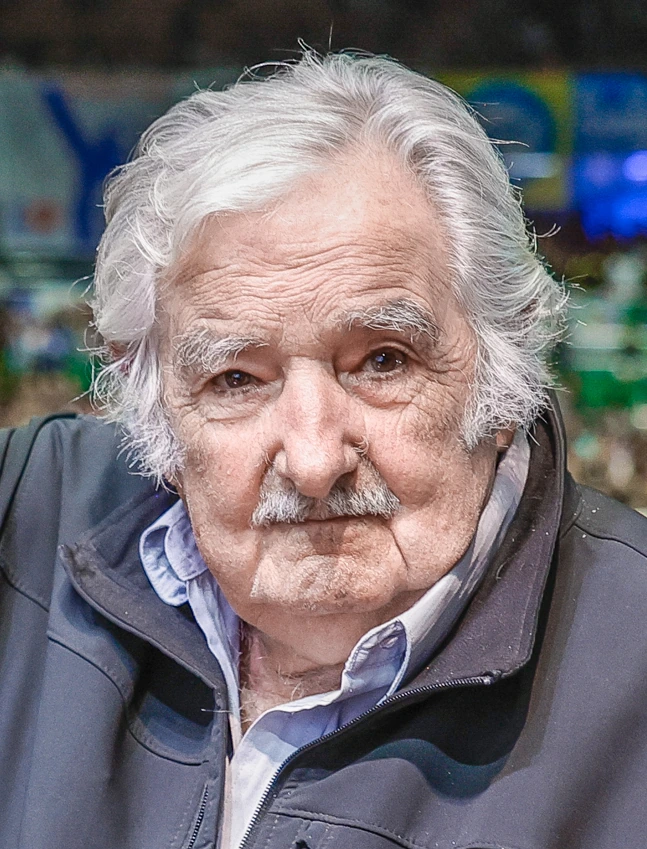
Who is Pepe Mujica and why do people keep asking about his money?

José Alberto 'Pepe' Mujica Cordano served as President of Uruguay from March 1, 2010 to March 1, 2015. Before that he was a guerrilla fighter with the Tupamaros, spent roughly 14 years in prison, and then rebuilt a political career through Uruguay's Frente Amplio coalition, eventually becoming one of the most recognizable Latin American leaders of the 21st century. He passed away in May 2025 at the age of 89, following a prolonged battle with esophageal cancer that had spread to his liver.
The reason his net worth gets so much attention is the famous contrast: he was a sitting head of state who lived in a farmhouse on the outskirts of Montevideo, drove a battered 1987 Volkswagen Beetle, and reportedly donated around 90 percent of his presidential salary to charity and his party, keeping roughly $1,250 a month for himself. That made him an international symbol of political austerity, which in turn made his actual financial picture a matter of genuine public curiosity rather than gossip. People want to know whether the story was real, and the good news is that Uruguay's transparency laws mean we actually have documentation to check.
The most defensible net worth estimate today
The most reliable anchor we have is Mujica's sworn end-of-term asset declaration filed with Uruguay's JUTEP (Junta de Transparencia y Ética Pública) on March 1, 2015. That document records a total net worth (Patrimonio Neto) of $8,077,063 Uruguayan pesos, with zero liabilities. In early 2015, the USD/UYP exchange rate hovered around 24–25 pesos to the dollar, which puts that figure at roughly $320,000 to $335,000 USD at the time of declaration.
From 2015 until his death in 2025, Mujica served as a senator, continued farming his chacra in Rincón del Cerro, gave occasional paid speaking engagements internationally, and was reportedly the subject of book projects. Accounting for a decade of modest but steady income, property appreciation in Uruguay, and his continued practice of donating large portions of his earnings, a post-2015 net worth in the $1 million to $2 million USD range is a reasonable and defensible estimate. Figures circulating online that place his net worth at $4 million or higher are almost certainly overstated, relying either on unadjusted peso figures misread as dollars or outdated conversion assumptions.
Breaking down what the public records actually show

Uruguay's JUTEP system required Mujica to file sworn declarations at the start of his presidency (2010), mid-term (2012, 2014), and at the end of his term (the 'por cese' filing dated March 1, 2015). Those documents are publicly available and itemized. Here is what the 2015 end-of-term declaration shows:
| Asset Category | Declared Value (UYP) | Approx. USD (2015 rate) |
|---|---|---|
| Bank deposits (3 accounts) | $4,193,563 | ~$168,000 |
| Real estate / Inmuebles (3 properties) | $4,401,000 | ~$176,000 |
| Vehicles (2 Volkswagen Fuscas) | $107,500 | ~$4,300 |
| Other assets (farm equipment/tractors) | $192,000 | ~$7,700 |
| Total assets (TOTAL ACTIVO) | $8,077,063 | ~$323,000 |
| Liabilities (Pasivo) | $0 | $0 |
| Net worth (PATRIMONIO NETO) | $8,077,063 | ~$323,000 |
The three bank accounts were held at Banco República and Bandes. The three real-estate entries include his well-known chacra (small farm) in Rincón del Cerro, which he and his wife, former senator Lucía Topolansky, had farmed for decades. The two vehicles listed are both Volkswagen Beetles, consistent with his publicly known transportation. El Observador informó que, en esas declaraciones publicadas por JUTEP, Mujica declaró dos Fusca, además de inmuebles y cuentas bancarias the two vehicles listed are both Volkswagen Beetles. The farm equipment is listed separately as 'otros bienes' and reflects the working nature of his property.
It is worth noting that the 2012 declaration put his net worth at approximately $4,203,000 UYP, and the 2014 declaration showed deposits of $3,276,070 UYP and real estate of $4,270,000 UYP. The growth between 2012 and 2015 is consistent with accumulated savings from the portion of his salary he did keep, plus modest property valuation increases.
What we know about his income during and after the presidency
As president, Mujica earned Uruguay's presidential salary. He publicly stated he kept approximately $1,250 per month and donated the rest to housing programs and his political movement, the MPP (Movimiento de Participación Popular). A 2016 El País Uruguay report on MPP legislators' disclosed declarations showed Mujica reporting a net liquid salary of $135,500 UYP, with $58,000 kept personally and $77,500 directed to the party. A 2016 El País Uruguay report on MPP legislators' disclosed declarations stated these figures in its summary. That pattern of giving away the majority was consistent throughout his term.
After leaving the presidency on March 1, 2015, Mujica transitioned to the Senate. He confirmed in a February 2015 interview with Subrayado that he would formally take on his senatorial role from March 2 onward. As a senator he would have drawn a legislative salary, again likely donating most of it per his established practice. He also earned income from the chacra, from international speaking invitations (which increased significantly after his presidency elevated his global profile), and from royalties or fees related to books and documentaries about his life.
How his wealth changed across the presidency
The JUTEP records give us a reasonably clear timeline. His net worth roughly doubled in peso terms between 2012 and his 2015 end-of-term filing. However, JUTEP itself noted a limitation: the 2010 declaration did not establish a formal Patrimonio Neto baseline, which means you cannot calculate the precise change from the very start of his presidency. What you can say is that between 2012 and 2015, his documented net worth grew from about $4.2 million to $8.1 million UYP, an increase of roughly $3.9 million UYP over three years. At a rough average exchange rate, that is approximately $155,000–$165,000 USD in total net worth growth across a three-year period, which is very modest for a head of state.
After leaving office, the trajectory becomes harder to document precisely because he was no longer subject to the same mandatory public disclosure regime. His senatorial declarations would have been filed with JUTEP or the relevant legislative body, but those filings did not receive the same level of media attention. The chacra remained his primary residence and a working farm, and property values in Montevideo's outskirts have appreciated meaningfully since 2015. That property appreciation is probably the single largest driver of any net worth increase in his post-presidential years.
Why different sources give different numbers
If you search for 'Pepe Mujica net worth' you will find figures ranging from under $1 million to over $4 million USD, and occasionally higher. Here is why those numbers diverge and how to read them:
- Currency confusion: The JUTEP documents use Uruguayan pesos (UYP), not US dollars. If a source reads '$8,077,063' from the declaration and treats it as dollars without converting, the result is a wildly overstated figure. Most inflated estimates have this problem.
- Outdated exchange rates: The peso has depreciated significantly against the dollar since 2015. A figure converted at 2010 rates will look very different from one converted at 2015 or 2025 rates.
- Lifestyle vs. wealth conflation: Some estimates treat the value of speaking fees or media attention as accumulated wealth, which is not how net worth works. Net worth is assets minus liabilities at a point in time.
- Exclusion of the donation factor: Mujica's widely documented practice of donating 80–90 percent of his income means his accumulated savings from salary were intentionally minimal. Sources that estimate his net worth by multiplying salary by years served without accounting for donations will dramatically overshoot.
- Property appreciation assumptions: His chacra and the other properties could be worth more than their 2015 declared values, but by how much depends on local real estate data that most net worth aggregators do not bother to find.
The most grounded approach is to start from the 2015 JUTEP declaration as a baseline (approximately $323,000 USD), add a reasonable estimate of post-2015 income net of donations, and apply conservative property appreciation. That is how you arrive at a $1 million to $2 million USD range for his net worth at the time of his death. It is not a flashy number, but it is the honest one.
How to verify this yourself and where to find updates
The most authoritative source is JUTEP's own website (jutep.gub.uy), which publishes the actual scanned PDF declarations for Mujica's 2010, 2012, 2014, and 2015 end-of-term filings. These are primary documents in Spanish, and the asset tables are straightforward to read even without fluent Spanish. The key fields to look for are 'PATRIMONIO NETO' (net worth), 'TOTAL ACTIVO' (total assets), and 'PASIVO' (liabilities). Always check the currency and apply a current exchange rate from a reliable financial source.
For media context, El Observador and El País Uruguay published detailed breakdowns of his declarations in April 2015 that remain useful references for understanding what the numbers mean in practical terms. International profiles in outlets like BBC Mundo and The Guardian tend to be stronger on biography than financial detail, so treat their net worth figures with caution.
One important distinction to keep in mind: net worth is not the same as income, pension, or lifestyle. Mujica's pension as a former president and former senator would have been a regular income stream separate from his asset base. His famously frugal lifestyle (the farmhouse, the Beetles, the small plot) reflects spending choices, not necessarily total wealth. A person can have $1.5 million in assets and live like someone with much less, which is precisely what made Mujica's story compelling and, frankly, unusual in global politics.
Putting his wealth in regional context
Compared to other Latin American political figures, Mujica's financial profile is strikingly modest. For reference, the broader category of current and former Uruguayan presidents tends to show higher asset bases than Mujica's, largely because most did not redirect the bulk of their salaries. In the broader Latin American political landscape, documented net worth figures for heads of state often run into the tens of millions of dollars, which makes Mujica's sub-million-dollar baseline at the end of his term genuinely unusual. His case is worth understanding as a data point in conversations about wealth and public service in the region.
The bottom line on interpreting his net worth
Mujica's financial story is well-documented by Latin American political standards, and that documentation points to a man who was, by any reasonable measure, not wealthy. For a related look at a different figure, see yuniesky betancourt net worth. His declared net worth at the end of his presidency was roughly $323,000 USD. A decade of post-presidential income, property appreciation, and speaking fees could plausibly push that to somewhere between $1 million and $2 million USD by the time of his death in May 2025. If you are comparing different “net worth” stories in Colombia, readers also search for Dario Antonio Usuga David net worth and similar profiles. The higher figures you might see online almost always trace back to currency misreading or methodology that ignores his lifelong practice of donating most of what he earned. The honest answer is that Pepe Mujica was an unusually poor head of state, and the records back that up.
FAQ
Why isn’t there a single official “net worth at death” number for Pepe Mujica?
The $1 million to $2 million estimate is best treated as a “likely range,” not a single official figure. After 2015, Mujica was no longer under the same high-attention disclosure cycle, so the remaining drivers (property value changes, post-presidency salary and pension, speaking and book-related fees, and continued giving) have to be modeled rather than directly totaled from one final sworn statement.
Why do some websites claim Pepe Mujica’s net worth is $4 million or higher?
Look for whether the source reports in pesos but labels the figure as dollars (or uses an outdated exchange rate). The article’s discussion of the 2015 end-of-term declaration highlights that many higher online numbers likely come from confusing peso totals with USD, or from applying the wrong conversion range year to year.
How much do debts or liabilities affect Pepe Mujica net worth estimates?
He reported zero liabilities in the 2015 end-of-term declaration, which means the conversion from “net worth” is relatively clean (no large debts being subtracted). If you see a figure presented as “net worth” that ignores liabilities or mixes asset and income numbers, it is less reliable than the sworn JUTEP asset totals.
Can someone have a higher net worth but still live very frugally, like Pepe Mujica did?
Net worth and lifestyle are not the same. Mujica’s low-profile living (farmhouse, older car, modest personal spending) is compatible with holding productive or appreciating assets, such as farmland value and other real-estate entries, while donating much of his usable income.
What’s the best way to compare competing Pepe Mujica net worth estimates fairly?
When comparing different “net worth” posts, prioritize methodology: a trustworthy estimate starts from the sworn declaration baseline (2015 is the anchor), then adds only what can be reasonably supported as post-2015 net income and conservative appreciation. Avoid estimates that back-calculate upward from viral anecdotes without showing how currency, donations, and time period were handled.
What most strongly drives changes to Pepe Mujica net worth after leaving office?
For the property portion, the key practical detail is that farmland and nearby real estate in Uruguay can change in value over time, even if the owner did not buy new property. That makes post-2015 net worth estimates more sensitive to appraisal assumptions than to additional income.
How do Mujica’s large donations influence his net worth versus his personal spending?
Donation behavior affects how much he personally kept, but it does not automatically reduce total asset values already on record. In other words, donating a large share of salary can keep lifestyle austere while still allowing savings accumulation over years, which can later show up as higher net worth.
Does Pepe Mujica’s reported monthly amount kept (or his salary) tell you his net worth directly?
Yes, but only indirectly. His salary and later pension would influence net worth mainly through what remained after donations and through how any savings were converted into assets. The article already separates “income” and “net worth,” so be careful not to treat monthly kept salary as if it equals total wealth.
Why might some estimates put Pepe Mujica below $1 million?
If a source claims his net worth is “under $1 million,” it may be using an estimate that treats the 2015 converted value as the final word and then assumes minimal post-2015 appreciation or income. That clashes with the article’s logic that a decade of modest income plus property appreciation can plausibly move the figure into the $1 million to $2 million band.
If I want to verify Pepe Mujica net worth, which specific numbers should I look for in the disclosure tables?
Use the declared fields rather than totals re-stated elsewhere. The article points to JUTEP table fields like “PATRIMONIO NETO” (net worth), “TOTAL ACTIVO” (total assets), and “PASIVO” (liabilities). If someone provides a single headline number without clarifying currency and those components, treat it as secondary analysis rather than a primary record.