
The Hernán Díaz most people are searching for right now is the Argentine-American novelist born in 1973, best known for his Pulitzer Prize-winning novel 'Trust' (2022). His estimated net worth sits in the range of $1 million to $5 million, with moderate confidence. If you meant Manuel Diaz Farms net worth specifically, double-check which Manuel Diaz the results refer to since similar names can mix together online. That range reflects a career built on literary fiction, academic employment, prestigious fellowships, and a growing international publishing profile, not a celebrity salary or a tech fortune. The $5 million figure that circulates on some aggregator sites is possible but almost certainly on the high end, and it comes with no verified financial disclosures behind it.
Hernán Díaz Net Worth Estimate: How to Identify the Right Person

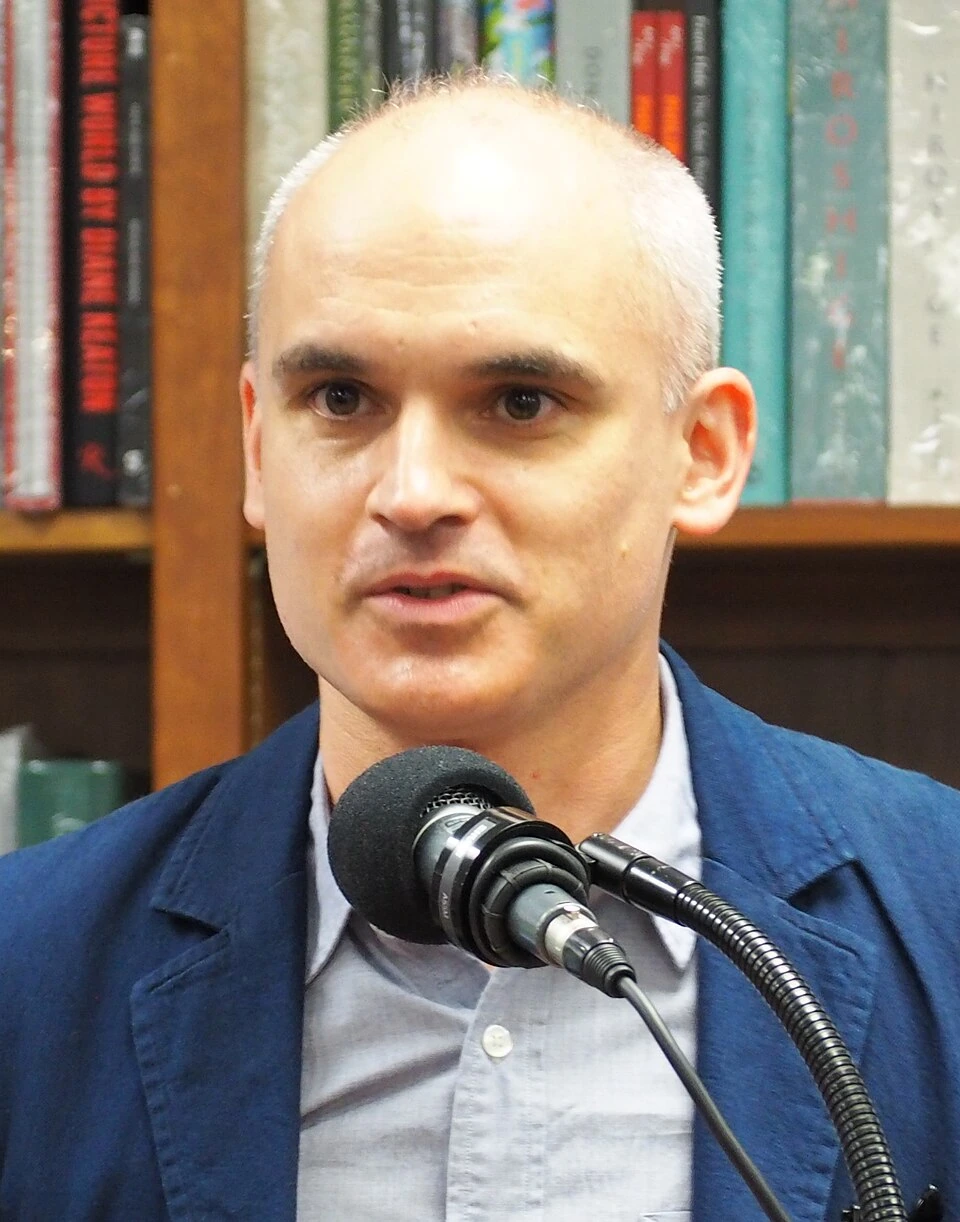
Which Hernán Díaz are you looking for?

This is genuinely important to sort out before you trust any number you find online. 'Hernán Díaz' is not a rare name, and different results on different sites may be describing completely different people. Here are the most likely candidates tied to public search attention:
- Hernán Díaz (writer, born 1973): Argentine-American novelist, author of 'In the Distance' and 'Trust,' 2023 Pulitzer Prize winner for Fiction, holds a Guggenheim Fellowship and Whiting Award, associated with Columbia University and NYU. This is almost certainly the person generating the most current search traffic.
- Francisco Hernán Díaz (architect): A different individual sometimes conflated with the writer on aggregator sites; some net-worth pages that mention 'architectural ventures' are likely mixing up identities or pulling from inaccurate data.
- Other Hernán Díazes in sports, regional politics, or business: Without additional context (country, field, specific achievement), these are harder to pin down and rarely generate significant English-language search volume.
If you arrived here looking for the writer, you're in the right place. If you were looking for someone else entirely, an athlete, a regional politician, or an architect, the quick verification tips at the end of this article will help you narrow it down fast. Quick identity check for the novelist: he published 'Trust' through Riverhead Books in May 2022, won the Pulitzer Prize for Fiction in 2023, and has a forthcoming novel called 'Ply' scheduled for release in September 2026.
The net worth estimate: what the numbers actually say
Estimated net worth for Hernán Díaz (writer): $1 million to $5 million, as of mid-2026. Confidence level: moderate-low. There are no public financial disclosures, tax filings, or salary records available for Díaz. The figures out there, including the $5 million estimate on at least one aggregator site, are modeled from career income proxies, not verified documentation. That is completely normal for a working author and academic, but it means you should treat any specific dollar figure as a rough bracket, not a bank balance.
The lower bound of $1 million is defensible given his career length, multiple book advances, academic salary, and fellowship income over roughly two decades. The upper end of $5 million requires generous assumptions about book advance sizes, royalty accumulation from 'Trust' (which was a major commercial and critical hit), international rights deals, and speaking/teaching fees. It's not impossible, but it is optimistic without supporting evidence.
Where the money actually comes from
Book publishing and literary advances

This is the core of his earning picture. Díaz is published by Riverhead Books, a prestigious imprint of Penguin Random House. His debut novel 'In the Distance' (2017) was a finalist for the Pulitzer Prize and the PEN/Faulkner Award, which would have raised his profile, and likely his advance size, substantially heading into 'Trust.' Major literary novels from recognized authors at big-five publishers typically command advances ranging from low six figures to well over $500,000 depending on bidding competition, prior sales history, and market timing. The advance for 'Trust' has not been publicly disclosed, but given the bidding environment for literary fiction in 2021-2022 and Díaz's track record, it was almost certainly his largest to date. His upcoming novel 'Ply,' announced by Riverhead for a September 2026 release, signals another advance cycle, though no figures have been shared.
Beyond advances, 'Trust' generated meaningful royalty income. The novel was a bestseller, won the Pulitzer, and sold international rights in multiple languages, including a Spanish-language edition published by Anagrama under the title 'Fortuna. Spanish Wikipedia identifies “blank" rel="noopener noreferrer">Fortuna” as a 2022 novel by Hernán Díaz (originally published as “Trust”) and discusses the author’s Pulitzer recognition context. An Anagrama listing for Fortuna (Hernán Díaz) at Herder supports that the Spanish-language edition is published by Anagrama under that title Anagrama under the title 'Fortuna'. ' International rights deals add incremental income that many net-worth calculators overlook or undercount.
Academic and teaching income
Díaz has held academic affiliations including positions at Columbia University and NYU, which provide stable base salary income. Creative writing faculty at elite New York universities can earn anywhere from $80,000 to over $200,000 annually depending on rank, tenure status, and course load. This is consistent, recurring income that forms a financial floor beneath the more variable publishing earnings. For most literary authors, academic employment is the reliable anchor of their personal finances.
Fellowships and prizes

Díaz has accumulated a notable list of fellowships and awards, each carrying a cash component. The 2023 Pulitzer Prize for Fiction came with a $15,000 prize. The Guggenheim Fellowship typically carries around $50,000. The Whiting Award for emerging writers comes with $50,000. The New York Public Library Cullman Center Fellowship provides a stipend as well. None of these are life-changing sums individually, but cumulatively they represent a meaningful supplementary income stream, and they signal the kind of career visibility that generates speaking invitations, residencies, and other paid appearances.
Speaking engagements and events
A Pulitzer-winning novelist with major-press credentials regularly receives paid speaking invitations from universities, literary festivals, and cultural organizations. Fees for authors at this level typically range from $5,000 to $25,000 per appearance depending on the event. This is a real income stream, though it is intermittent and hard to model precisely without an agent's booking history.
Key financial milestones along the timeline
| Year | Milestone | Financial Significance |
|---|---|---|
| 2017 | 'In the Distance' published by Coffee House Press | Debut novel; modest advance, but Pulitzer finalist status elevated his market value |
| 2017-2021 | Academic positions, Whiting Award ( | Cumulative fellowship and salary income; career-building phase |
| 2022 | 'Trust' published by Riverhead Books (May 3, 2022) | Largest advance of career (undisclosed); major commercial and critical launch |
| 2022-2023 | 'Trust' becomes bestseller; international rights sales (Anagrama/Fortuna in Spanish) | Royalty income and rights deals; significantly raised earning ceiling |
| 2023 | Wins Pulitzer Prize for Fiction ($15,000 prize) | Verifiable income; also triggered substantial post-Pulitzer sales lift and speaking demand |
| 2023-2025 | Post-Pulitzer speaking, residencies, continued royalties | Ongoing income streams; no specific figures publicly available |
| 2026 | 'Ply' (new novel) announced for September 2026 release via Riverhead | New advance cycle; another publishing income event in progress |
How net worth estimates like this are actually built
For a working author and academic like Díaz, a net worth estimate is constructed from proxies and reasonable assumptions because there are no public financial filings to pull from. Here is what a careful estimate looks like, and what inputs are actually verifiable versus assumed:
| Income Source | Verifiable? | Estimated Range |
|---|---|---|
| Book advances (career total) | Partially — publishers confirmed, amounts undisclosed | $200K–$1M+ cumulative (modeled) |
| Royalties from 'Trust' | Not disclosed | $100K–$500K+ (modeled from sales estimates) |
| Academic salary (career) | Not disclosed publicly | $80K–$200K/year while employed |
| Fellowship income (Guggenheim, Whiting, etc.) | Verified amounts per program | ~$150K–$200K cumulative |
| Pulitzer Prize cash | Confirmed: $15,000 | $15,000 |
| Speaking fees | Not disclosed | $5K–$25K per event; frequency unknown |
| International rights (Anagrama, others) | Publisher confirmed; amounts undisclosed | Modest to significant depending on deal terms |
After rough modeling across these streams, a net worth in the low-to-mid seven figures is plausible for someone at Díaz's career stage. The $5 million ceiling cited by some sites reflects an optimistic scenario where book advances were large, royalties have compounded strongly, and assets (property, investments) have been accumulated over time. The lower bound of roughly $1 million is the conservative scenario that treats advances as modest and assumes a standard academic savings rate.
Why the numbers vary so much across websites
If you have searched 'Hernán Díaz net worth' and seen wildly different figures, here are the specific reasons that happens, and they all apply to this case. Remedios Díaz-Oliver net worth estimates can vary for similar reasons, since the underlying income and asset data are rarely fully documented.
- Identity confusion: Some sites are estimating a different Hernán Díaz entirely (like the architect mentioned on at least one aggregator). If a site talks about 'architectural ventures' as a core income source, it is not estimating the novelist.
- No verified disclosures: Literary authors do not file public earnings reports. Every dollar figure you see is a model, not a record. Sites that present a single confident number ($5 million, $3 million) without methodology are guessing, sometimes from each other.
- Stale data: A net worth estimated before the Pulitzer win and the post-2022 commercial success of 'Trust' would look very different from one calculated today. Many aggregator sites do not update frequently.
- Different assumptions about advances: Book advance sizes are usually confidential. One model might assume $100,000; another might assume $1 million. That difference alone creates a multi-million-dollar swing in the final estimate.
- Aggregator copy-paste problem: Several sites recycle the same figure from a single original estimate without adding new research. This creates the illusion of consensus where none actually exists.
- Missing income streams: Sites focused on one career angle (just books, or just teaching) will undercount by ignoring the full picture of fellowships, rights deals, and speaking income.
How to check you have the right person, and the right number

If you want to verify whether a net worth page is actually describing the novelist Hernán Díaz and not someone else, run through this quick checklist before trusting the figure:
- Does the page mention 'Trust' or 'In the Distance' as his novels? Those are the clearest identity markers for the writer.
- Does it reference Riverhead Books as his publisher, or Anagrama for the Spanish-language edition? Those are verifiable and specific.
- Does it mention the 2023 Pulitzer Prize for Fiction? That is a factual, publicly confirmed event on the Pulitzer Prize website.
- Does it describe him as Argentine-American and born in 1973? Wikipedia and the Pulitzer site both confirm this.
- Does the income breakdown make sense for a literary author (book advances, royalties, academic salary, fellowships)? If you see 'architectural ventures' or 'construction business,' the site has the wrong person.
- Is the estimate recent enough to account for the post-2022 commercial success of 'Trust'? Figures from before 2022 will be substantially understated.
If you landed on this page but are actually looking for a different Hernán Díaz, an athlete, a politician, a businessperson from Latin America, add a specific qualifier to your search: try 'Hernán Díaz [country] [sport/field]' or 'Hernán Díaz [team name]' to cut through the noise. The novelist dominates English-language search results right now, especially after the Pulitzer, so other Hernán Díazes get buried unless you add those context terms.
For comparison, other literary and academic figures in the broader Hispanic public profile space tend to fall in similar or overlapping wealth ranges. Authors like Junot Díaz, who also won a Pulitzer and has a long academic career, occupy a comparable bracket, successful by any literary standard, but nowhere near the wealth of a major entertainment or sports figure. Junot Díaz has also been the subject of similar net worth speculation because his publishing and academic career shaped his public earnings profile. That cross-sector perspective matters when you're calibrating whether any given estimate sounds realistic or inflated.
The bottom line on Hernán Díaz's net worth
The honest answer is: Hernán Díaz (the novelist) has built meaningful, documented wealth through a combination of literary publishing, academic employment, and prestigious fellowships, with a major commercial leap after 'Trust' became a Pulitzer Prize winner in 2023. A net worth in the $1 million to $5 million range is a reasonable, research-grounded estimate for mid-2026. The $5 million figure circulating on some sites is possible but should be treated as an upper bound until better data surfaces. With a new novel ('Ply') coming in September 2026, there is a fresh advance cycle underway that could nudge that range upward over the next year or two. As always with literary figures, the honest answer involves more modeling than measurement, and any site telling you otherwise is not being straight with you. If you are specifically looking for damacio diaz net worth, be aware that most “net worth” pages mix up different people with similar names net worth estimate.
FAQ
Why do net worth websites give different numbers for Hernán Díaz, even when it is the same novelist?
Most sites use income proxies (book advances, royalty assumptions, academic pay ranges) and then pick different inputs for each category, such as how large the “Trust” advance was or how much international rights sold. If they do not disclose assumptions, a $1 million to $5 million band can turn into a single sharper figure that is not actually evidence-based.
Is $5 million realistic for Hernán Díaz, and what would need to be true for it to happen?
It is plausible only under optimistic assumptions: a very large “Trust” advance, strong and sustained royalty performance after the Pulitzer, sizable international rights revenue that many calculators undercount, plus consistent savings and asset accumulation over time. Without any public disclosures, $5 million is best treated as a high-end scenario, not a measured outcome.
Can I verify Hernán Díaz net worth using public financial documents?
For most private individuals (including writers and academics), there usually are no accessible personal tax filings, bankruptcy records, or routine public balance sheets to confirm a net worth number. Verification is typically limited to proxy signals like publicly known prize amounts, institutional roles, and documented publishing milestones.
Does book advance or royalty income make up most of Hernán Díaz’s finances compared to his university salary?
For many literary authors with academic jobs, the university role creates a stable floor, while advances and royalties create spikes. In Díaz’s case, “Trust” likely drove a major temporary increase, but the recurring academic and fellowship income typically matters for maintaining financial steadiness between book cycles.
How should I interpret “net worth” versus “income” for Hernán Díaz?
Net worth is the total value of assets minus liabilities, it can grow slowly even when annual income is high, and it can look flat despite one successful book if spending and debt rise too. Income-only signals, like speaking fees or a publishing bump, do not automatically translate to a higher net worth immediately.
What is the most common mistake when searching “Hernán Díaz net worth”?
Name collision. There are multiple people with the same or similar name, and aggregator pages often blend data from different individuals. The article’s checklist (adding field, country, or a qualifier) is the key fix before trusting any dollar figure.
If I want the most accurate estimate, what sources should I look for besides net worth aggregators?
Focus on verifiable building blocks: publisher release info for which book is being credited, documented awards and prize amounts, publicly announced academic appointments, and any disclosed fellowship stipends. If a “net worth” page cannot point to any of these anchors, treat it as modeling rather than measurement.
Could Hernán Díaz’s upcoming novel “Ply” change the net worth range quickly?
It could nudge the range upward, but net worth changes generally lag behind announcements because the advance and royalties depend on contract terms and sales performance. Even with a new book, you might see income signals first (advance-related cash flow), while the net-worth estimate may not shift proportionally until later years.
Are comparisons to authors like Junot Díaz useful when estimating Hernán Díaz net worth?
They can help sanity-check broad patterns, for example both can be high-visibility Pulitzer-era academics, but comparisons do not replace assumptions about unique deals, asset history, and career timing. Treat cross-author comparisons as a calibration tool, not a direct formula.
What does “moderate-low confidence” mean in practice for Hernán Díaz net worth estimates?
It means the estimate is sensitive to unknown variables, especially the size of major advances, how long royalties continued after “Trust,” and how much of the earnings translated into retained assets. A wide bracket is more honest than a precise single number.