
Junot Díaz's net worth is most commonly estimated in the range of $3 million to $10 million, with a few celebrity aggregator sites pushing figures as high as $85 million. That high-end number is almost certainly inflated and unsupported by any documented financial disclosure. A more defensible range, based on his known income streams and career milestones, sits closer to $3 million to $6 million, built over decades through book advances, long-tail royalties, a tenured named professorship at MIT, fellowship grants, and speaking fees.
Junot Díaz Net Worth: Estimated Wealth and How It’s Calculated

Carlos Reyes
18 May 2026
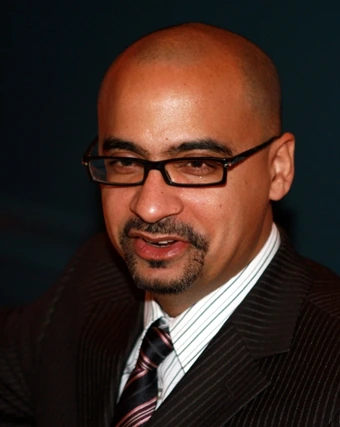
What Junot Díaz is known for (and why people search his wealth)
Junot Díaz is a Dominican-American author and MIT professor best recognized for winning the 2008 Pulitzer Prize for Fiction with his novel The Brief Wondrous Life of Oscar Wao. That prize alone put him in a small, elite group of literary figures whose names carry lasting commercial and cultural weight. He also published the short story collection Drown, the later collection This Is How You Lose Her ([published by Riverhead Books, later distributed through Penguin Random House](https://www. penguinrandomhouse.
com/books/289020/this-is-how-you-lose-her-by-junot-diaz/9781594631771/)), and the children's picture book Islandborn, which won a Pura Belpré Award. On top of the writing career, he holds the named Rudge and Nancy Allen Professorship of Writing at MIT, a position he has held for years. Searches for his net worth tend to spike whenever a new award, book release, or controversy puts him back in the headlines.
He is also one of the most prominent Dominican-American literary voices in the United States, which makes him a natural subject for sites focused on documenting Hispanic celebrity wealth.
The estimated net worth range and what drives it

The most defensible estimate for Junot Díaz's net worth as of 2026 is somewhere between $3 million and $6 million. Here is why that range holds up better than the outlier figures you will find on some aggregator sites.
No public financial disclosure, audited statement, or verified contract has been released for Díaz. For example, there is no reliable public basis for calculating Damacio Diaz net worth, so most online numbers should be treated cautiously. Every number circulating online is an estimate derived from public career data. The $85 million figure that appears on at least one net-worth list is almost certainly a mistake or an algorithmic exaggeration.
For context, even the most commercially successful literary novelists, people like Cormac McCarthy or Toni Morrison, rarely crossed the $10 million mark in publicly estimated net worth during their active careers, unless they had major film adaptations or licensing windfalls. Díaz is critically acclaimed but not a mass-market thriller author moving millions of units per year, which matters when you model cumulative royalty income.
What anchors the lower bound of the range are his confirmed income streams: a named professorship salary at MIT (named chairs at top research universities typically come with salaries in the $150,000 to $300,000 range, though exact figures are not publicly disclosed), royalties from books that have been in print for decades, advances on multiple titles, and a $500,000 MacArthur Fellowship grant he received in 2012. Those components alone, accumulated over 20-plus years, support a multi-million-dollar net worth without any need to speculate about undisclosed deals.
How his income likely comes together
Book advances and royalties

For a debut author, Díaz's advance for Drown in 1996 was likely modest by today's standards, probably in the low-to-mid five figures. But the Pulitzer Prize for Oscar Wao in 2008 is the financial turning point. Pulitzer wins reliably drive a multi-year surge in backlist sales, and publishers often renegotiate or issue new editions with improved royalty terms. Standard trade royalty rates run between 10 and 15 percent of list price for hardcovers and 7.
5 percent for paperbacks, meaning that even modest ongoing sales across three-plus adult titles can generate tens of thousands of dollars per year in passive royalty income. The film option deal for Oscar Wao with Miramax Films and producer Scott Rudin, reported in 2007, would have also generated option fees, though the amounts were not publicly disclosed and the film has not been produced as of 2026, so backend proceeds have not materialized.
Academic salary at MIT
Díaz joined MIT as an associate professor in 2003 and now holds the named Rudge and Nancy Allen Professorship of Writing. MIT’s People page lists Junot Díaz as the “Rudge and Nancy Allen Professor of Writing.” Rudge and Nancy Allen Professorship of Writing at MIT. Named professorships at institutions like MIT are among the highest-compensated faculty positions in the country. A salary in the $150,000 to $300,000 range annually, sustained over more than 20 years, represents a very significant cumulative income stream that many net-worth models for literary figures overlook entirely. This is steady, reliable income independent of whether a new book is selling.
Fellowships and grants

The 2012 MacArthur Fellowship, commonly called the genius grant, came with a $500,000 stipend paid over five years with no strings attached. The Los Angeles Times confirmed the grant amount at the time. Díaz also holds a Guggenheim Fellowship and a Radcliffe Institute fellowship, both of which carry cash awards, though the MacArthur is by far the largest confirmed one-time cash milestone in his public career. These fellowships are not ongoing salary, but they are meaningful wealth events that would show up in any credible net-worth estimate.
Speaking fees and media appearances
Authors at Díaz's career level, Pulitzer winners with named university chairs, typically command speaking fees in the $10,000 to $30,000 range per engagement. MIT's own news archives document public readings and appearances, and an author of his stature would receive fees for keynotes, university talks, and literary festival appearances. These are not disclosed, but they are a recurring income stream for active public intellectuals at his level.
Children's book and licensing
Islandborn, his 2018 picture book, won the Pura Belpré Award and appears in Junior Library Guild listings, which signals strong institutional distribution. Children's picture books have distinct royalty structures and licensing channels, including school and library markets that generate steady long-tail income. It is a smaller revenue stream than his adult fiction, but it diversifies the royalty base.
Major career financial milestones to consider
| Year | Milestone | Financial Significance |
|---|---|---|
| 1996 | Drown published | Initial advance; modest but established publishing relationship |
| 2003 | Joins MIT faculty | Begins stable academic salary; eventually becomes named chair |
| 2007 | Oscar Wao film rights optioned (Miramax/Scott Rudin) | Option fees received; backend contingent on production (not yet produced) |
| 2007–2008 | Oscar Wao published and wins Pulitzer Prize | Backlist surge, new edition deals, increased advance leverage on future books |
| 2012 | MacArthur Fellowship ('genius grant') | $500,000 stipend confirmed; major one-time wealth event |
| 2012 | This Is How You Lose Her published (Riverhead/PRH) | New advance; strong sales supported by existing author platform |
| 2018 | Islandborn published | Pura Belpré Award winner; expands royalty streams into children's market |
| Ongoing | Named professorship at MIT | High-end academic salary sustained across two-plus decades |
How to verify and judge net worth estimates

If you want to check or update a net worth figure for Junot Díaz yourself, here is the honest reality: there is no public financial filing you can pull. Unlike a publicly traded company CEO, authors and professors do not disclose income or assets. What you can do is triangulate from credible institutional sources.
- Start with institutional records. MIT's faculty pages, department listings, and news archives confirm his employment status and named chair. That tells you a salaried academic income is real and ongoing.
- Confirm fellowship grants. The MacArthur Foundation press releases and news archives from 2012 confirm the $500,000 grant. The Guggenheim Foundation's site maintains fellowship records. These are primary sources, not estimates.
- Check publisher and trade data. Publishers Weekly, Bowker (ISBN data), and Penguin Random House's own site confirm his books are in print and commercially distributed. Sales rank data from Amazon and BookScan (available to some subscribers) can give rough sales volume proxies.
- Look for disclosed deal news. Publishers Marketplace and Publishers Weekly trade press sometimes report advance ranges using coded language (e.g., 'a good deal' = $50,000–$99,000). Search for any Díaz deals reported at the time of publication.
- Evaluate celebrity net worth sites carefully. CelebrityNetWorth, NetWorthList.org, and similar aggregators produce estimates, not verified figures. Wikipedia explicitly notes that CelebrityNetWorth's pages are estimates. The $85 million figure floating on at least one site lacks any sourced methodology and should be treated as unreliable.
- Cross-reference multiple estimates and look for sourcing. If two or three independent sources that show their reasoning land in the same range, that range is more defensible. If one site is an outlier with no explanation, discount it.
Why writer net worth estimates vary so much
The gap between a $3 million estimate and an $85 million estimate for the same person is not just sloppy math. It reflects structural problems in how net worth gets estimated for authors specifically.
Most celebrity net worth models are built on entertainment industry assumptions: record deals, box office receipts, endorsement contracts. Those data points are more visible. For writers, the income is quieter. Advances are rarely disclosed publicly. Royalty statements go only to the author and their agent. Academic salaries at private universities like MIT are not subject to the same public disclosure rules as state schools. That means estimators are guessing more than they let on.
Long-tail royalties also complicate things. A book like Oscar Wao, which has been assigned in university courses for 15 years and continues to sell in paperback, generates ongoing income that accumulates slowly and invisibly. A one-time estimate that looks only at the year of publication badly undercounts lifetime earnings from that title. Meanwhile, a model that extrapolates from peak-year sales and treats them as ongoing can badly overcount. Both errors happen regularly on aggregate sites.
It is also worth noting that gross career earnings and net worth are different things. If Díaz has earned $8 million over his career from all sources combined, taxes, living expenses, and any investment decisions reduce what remains as net worth. Federal income tax rates on top earners run above 37 percent, and state taxes in Massachusetts add another layer. A $500,000 MacArthur grant is not $500,000 in net worth: it is taxable income in the years received.
For comparison, other Díaz-adjacent figures in the literary and Hispanic public sphere illustrate how much wealth varies even within the same rough category of 'prominent author.' Writers with primarily literary careers tend to cluster in the low-to-mid millions rather than the tens-of-millions range unless they have had major film or television adaptations generate ongoing backend royalties.
Taxes, royalties, and whether you can trust these numbers
Royalties are treated as ordinary income by the IRS, not as capital gains, which means they are taxed at the author's marginal rate. For someone earning at Díaz's estimated level across salary, royalties, and speaking fees, that could mean an effective federal rate of 30 to 35 percent, plus state income tax. This is why a Pulitzer-winning author with millions in career earnings does not necessarily have a net worth that matches their gross income over time.
MacArthur grants are also taxable. The foundation itself notes that fellows are responsible for applicable taxes on the stipend. At the time of receipt, the $500,000 over five years ($100,000 per year) would have been taxed at ordinary income rates, leaving a net benefit closer to $60,000 to $65,000 per year after combined federal and state tax, which is still meaningful but far less than the headline number suggests.
Book advances work differently from royalties in one important way: an advance is paid upfront but must earn out before the author receives additional royalty payments. If an advance for a short story collection is $200,000 and the book sells 30,000 copies at a $15 list price with a 10 percent royalty, the author earns $45,000 in royalties against the $200,000 advance and does not see additional checks until sales reach the break-even point. Many critically acclaimed literary books never earn out their advances, meaning the advance itself is the total payout. This is not a failure for the author financially, but it means that high advance numbers do not automatically translate to ongoing royalty income.
The bottom line on reliability: treat any net worth figure for Junot Díaz, including the range in this article, as an informed estimate, not a fact. The $3 million to $6 million range is grounded in documented income streams and reasonable assumptions about salary and royalty accumulation. The $85 million figure is not.
When you see a number on a celebrity net worth site, the most useful question to ask is: what sources did they use, and do those sources actually disclose financial data? For most literary figures, the honest answer is that the sources do not exist, and the number is a model built on public career signals. That is fine as a starting point, but it should never be treated as verified.
If you are searching for remedios diaz-oliver net worth specifically, the same limitation applies: reliable public financial disclosures are rarely available for private individuals. Hernan Diaz net worth estimates are similarly modeled from public career signals and should be treated as rough ranges rather than verified figures.
FAQ
Why do some sites list Junot Díaz net worth as high as tens of millions if the article suggests a lower range?
Most high figures come from generic celebrity-net-worth formulas that assume steady, film or mass-market licensing style income. For literary authors, key inputs like exact royalty statements, endorsement deals, and verified asset holdings are usually not public, so those models can effectively “fill in” missing data and inflate totals.
Is Junot Díaz net worth based on his Pulitzer Prize money or is that just a small part?
The Pulitzer Prize is a major public milestone, but net worth is usually driven more by sustained income after the win, like backlist royalty growth, reprints, and improved terms for later editions. A one-time prize amount also gets taxed like ordinary income, so it rarely equals the net worth jump headline numbers imply.
How much of his wealth is likely to come from MIT salary versus book royalties?
MIT salary provides a steady baseline, but his writing also has long-tail royalties that can accumulate gradually for years. A practical way to think about it is that salary helps fund ongoing saving, while royalties can add variability, especially when new books, new editions, or classroom adoption boost sales.
Do advances automatically mean he earned that amount in net worth?
No. Advances are paid upfront, but net royalties typically do not increase until the book “earns out” that advance. If a title never crosses the earn-out threshold, the advance may be the only royalty payout from that book, so big advance numbers do not always imply long-term passive income.
Could the MacArthur Fellowship amount be treated as net worth?
Not directly. The fellowship stipend is taxable ordinary income and is received over multiple years, so the net increase in personal wealth is the after-tax amount plus whatever is saved or invested from it. Net worth reflects what remains after expenses, taxes, and investment performance.
What does the article mean by long-tail royalties, and why can that change net worth estimates?
Long-tail royalties come from ongoing sales over many years, not just the initial launch period. Estimators can undercount if they use first-year sales snapshots, or overcount if they assume peak sales continue indefinitely. That’s one reason ranges vary widely across aggregator sites.
Are speaking fees significant enough to move his net worth estimate?
They can be meaningful but are usually not the dominant driver compared with salary plus long-duration book royalties. Speaking income is typically episodic and can vary by year, so it may explain some upward movement in a range without justifying extreme outlier net-worth numbers.
How can I sanity-check a net worth number without access to private financial disclosures?
Use triangulation: compare estimated annual cashflow categories (academic salary, likely royalty bands, fellowship stipend after-tax, and plausible speaking frequency) with a reasonable savings and tax framework over decades. If a net-worth site cannot describe how it handled taxes, earn-outs, and time horizon, the figure is likely speculative.
What common mistake do net-worth calculators make for authors specifically?
They often treat gross career earnings as if they convert directly into net worth. For authors, the gap between earnings and net worth can be large because of taxes, advance recoupment mechanics, spending, and the fact that royalties are not continuous unless books remain in demand.
Do taxes in Massachusetts and federal rates substantially affect net worth estimates?
Yes, taxes can materially reduce take-home amounts. The key point is not just the tax rate, but timing and compounding, because the after-tax money is what gets saved or invested. Many net-worth estimates skip tax treatment entirely, which inflates the implied wealth.
If an outlier number is wrong, what signs usually indicate it?
Look for numbers that lack a method tied to real disclosures, use entertainment-industry assumptions that do not fit literary publishing, or extrapolate peak-year sales as if they were permanent. Another red flag is that they cite no verifiable source for assets, income, or tax-related adjustments.
Could investments explain why net worth estimates differ even if income is similar?
Yes. Even with comparable annual income, investment returns, risk tolerance, and whether the person saved aggressively can lead to different wealth accumulation paths. However, without public holdings or performance data, investment effects usually stay an unknown rather than a defensible input.