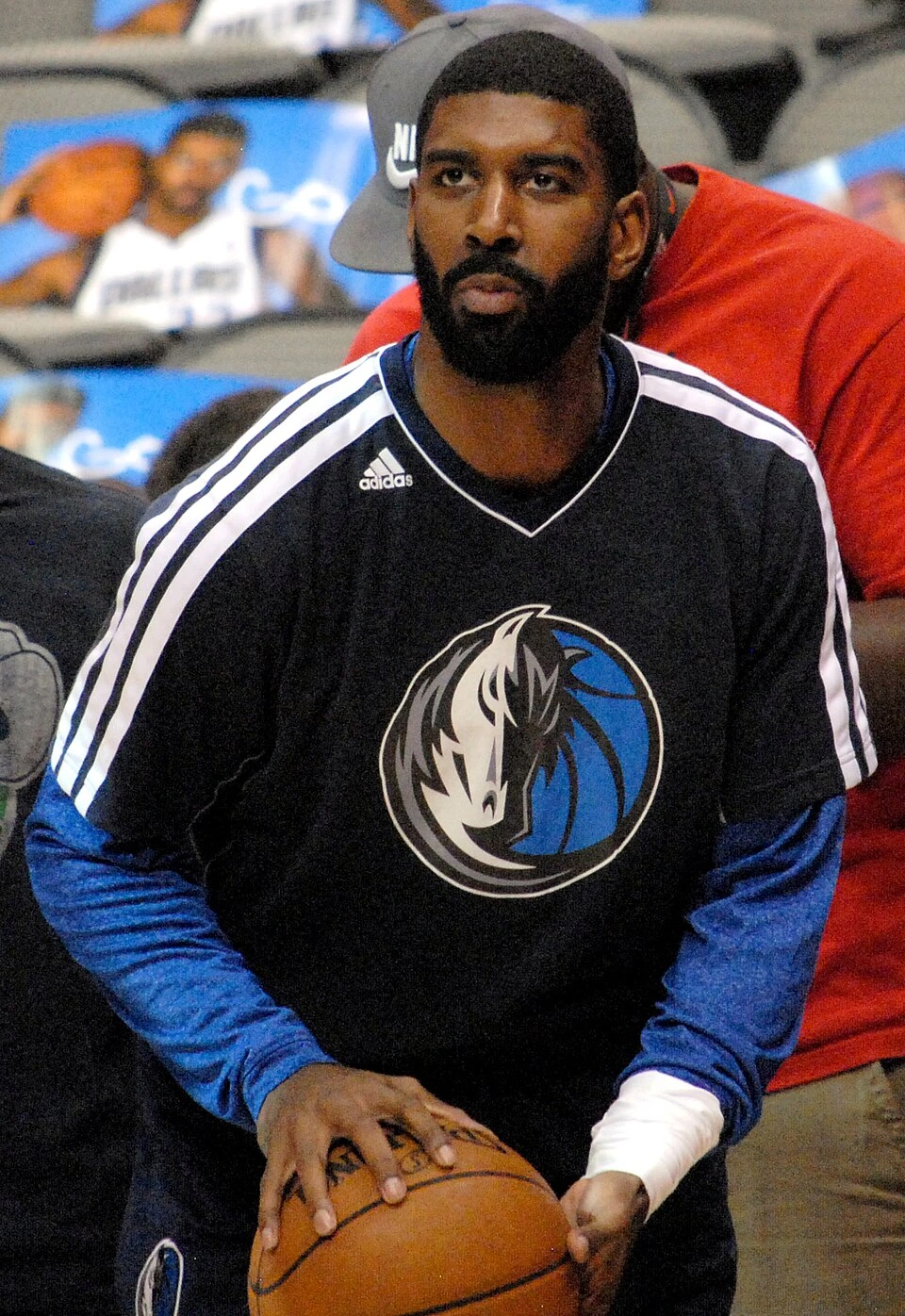
He was the third overall pick in the 2008 NBA Draft and arrived with enormous expectations, a Nike shoe deal already in hand before he played a single professional minute. The "OJ" or "Bo" nickname confusion you sometimes see online just comes from regional nicknames and informal references, but make no mistake: official NBA records, ESPN's player bio, and NBA. com's player page all confirm this is one person with one documented career. NBA.
com hosts a player stats/profile page for O. J. Mayo (player id 201564) [NBA. com player page](https://www.
nba. com/stats/player/201564/traditional).
It's worth distinguishing him from others who share a similar name. If you've come across references to Dimitrius Mayo's net worth in related searches, that's a completely different individual. O.J. Mayo the NBA player is the subject here, and his financial story is specific, well-documented in parts, and genuinely instructive about how fast professional athlete wealth can rise and fall.
What "net worth" actually means here
Net worth is assets minus liabilities. For a public figure like O.J. Mayo, it is always an estimate, never a certified audited figure. No one outside his personal accountant has access to his full balance sheet. What researchers do instead is aggregate verifiable public data, including documented NBA contracts, reported endorsement deals, public real estate records, and court filings, then triangulate a reasonable range. The number you see on most celebrity net worth sites is the midpoint of that range, and it should always carry a margin of error.
This matters especially for athletes because gross career earnings and actual current net worth can be dramatically different. A player who earned $46 million in NBA salary over his career could still have a net worth far below that figure after taxes (typically 40-50% on top brackets), agent fees (usually 3-4%), legal costs, lifestyle spending, bad investments, and debt. So when you read that O.J. Mayo earned roughly $46.1 million in documented NBA salary (with a gross figure closer to $63.2 million reported including incentives), that is the starting ceiling, not the answer.
How to actually estimate his net worth

The methodology for estimating O.J. Mayo's net worth involves four steps: documenting career income, accounting for deductions and taxes, identifying known assets and liabilities, and then flagging unverifiable gaps honestly. Here's how each layer works in practice.
Start with NBA salary databases. HoopsHype and Basketball-Reference both maintain season-by-season salary records, and they list Mayo's documented earnings at approximately $46. 1 million, with a broader figure around $63. 2 million that includes incentive clauses and gross contract values.
These are the most reliable income anchors available. Next, layer in endorsement income. Mayo signed with Nike on June 26, 2008, before his rookie season even started, which was a significant deal for a first-round pick at the time. The exact dollar value of that Nike contract was never fully disclosed, but rookie shoe deals for top-three picks in that era typically ranged from $1 million to $5 million annually in base value, with escalators.
Cross-referencing Sports Business Journal reporting from that period helps establish a reasonable range. Think of this the way you'd approach Yoan Moncada's net worth framework: start with documented contracts, then layer in ancillary income, then subtract known liabilities.
After income, look at real estate records and court filings. These are public and often the most honest window into an athlete's actual financial health. In Mayo's case, the real estate record is instructive and sobering, which I'll cover in detail below. Finally, factor in the career disruption. Mayo was disqualified from the NBA for two years starting July 1, 2016, after violating the league's anti-drug program. Blazer’s Edge summarizes Mayo’s two-year disqualification context for violating the NBA’s anti-drug policy, aligning with this timeline violating the league's anti-drug program. That suspension didn't just end his NBA earnings, it made a comeback dramatically harder and altered his earning trajectory permanently.
Breaking down where the money came from (and where it went)
NBA contract income

This is the bulk of Mayo's documented earnings. His NBA salary history runs from his 2008 rookie contract through his Milwaukee Bucks deal and beyond. The Bucks signed him to a three-year, $24 million contract on July 13, 2013, which was one of the highest-profile free agent signings of that offseason. Mayo himself acknowledged in a Sports Illustrated interview that the Bucks paid him $8 million during his time there.
Before Milwaukee, he opted out of his Dallas Mavericks deal (he signed a two-year contract with Dallas in July 2013 but chose to decline the player option and pursue free agency, which is how he landed the larger Milwaukee deal). Across all teams, documented NBA salary totals sit in the $46-63 million range depending on which figures and contract structures you include.
Endorsements and brand deals
The Nike deal signed in June 2008 was Mayo's most significant endorsement. CNBC reported on the signing, and Sports Business Journal covered the agent context around it, noting that Mayo was represented by Leon Rose's CAA at the time. Top-three draft picks with shoe deals in 2008 were earning meaningful money from footwear brands, though the amounts for non-superstar players were far below the headline-grabbing LeBron-level contracts. A reasonable estimate for Mayo's endorsement income over his career peak is somewhere in the $2-8 million range total, though this figure has more uncertainty than the salary data.
Real estate: a cautionary data point
Public records show that Mayo purchased a 9,200-square-foot home in River Hills, Wisconsin, for $1.8 million, a purchase documented by BizTimes using state records. That purchase reflects the kind of lifestyle spending common among professional athletes during peak earning years. However, the same property went into foreclosure in October 2018, according to court records reported by Realtor.com, with Urban Milwaukee also covering the loss of the home. A foreclosure on a $1.8 million property is a significant financial red flag. It suggests that by 2018, roughly two years after his NBA suspension, Mayo's liquidity had deteriorated substantially. For net worth purposes, this shifts the real estate column from a positive asset to a liability event.
Post-NBA income
After his NBA suspension ended, Mayo pursued a comeback. NBC Sports reported that he signed in Puerto Rico as part of that effort, playing overseas to re-establish himself for a potential NBA return. Overseas league salaries for former NBA players vary enormously: a journeyman role might pay $200,000-500,000 per season, while a marquee signing can push higher. There's no publicly confirmed figure for Mayo's Puerto Rico deal, so this is an acknowledged gap in the estimate.
Career earnings timeline and the pivotal moments
Understanding Mayo's net worth requires understanding the shape of his career, because the financial trajectory mirrors the on-court one almost exactly.
| Year / Period | Event | Financial Impact |
|---|
| 2008 | 3rd overall NBA Draft pick; rookie contract; Nike deal signed | Guaranteed rookie salary + endorsement income begins |
| 2008-2011 | Memphis Grizzlies years | Steady NBA salary, developing player market value |
| 2011-2012 | Dallas Mavericks (first stint) | Contract earns; NBA lockout-shortened season reduces prorated pay |
| 2012-2013 | Dallas Mavericks (second stint) | Signs two-year deal; opts out after year one for free agency |
| 2013 | Milwaukee Bucks: 3-year, $24M deal signed July 13 | Largest single contract; peak earnings period begins |
| 2013-2016 | Bucks years | ~$8M acknowledged paid; foreclosure-era spending also begins |
| July 2016 | NBA disqualification for two years (anti-drug program violation) | All NBA salary stops; no team income for two full seasons |
| 2018 | River Hills home goes to foreclosure (October 2018) | Major asset lost; net worth in visible decline |
| Post-2018 | Puerto Rico signing; NBA comeback pursuit | Reduced overseas income; no confirmed return to NBA |
The arc here is classic "high ceiling, compressed window." Mayo earned at an elite level during his peak years but faced the two-year suspension right when he would have been entering the higher-paid veteran phase of his career. Athletes who experience that kind of forced income gap while maintaining lifestyle costs often see net worth compress rapidly, and the foreclosure record strongly suggests that happened here.
How to verify numbers and spot unreliable claims

The internet is full of celebrity net worth figures that range from plausible to completely fabricated. Here's how to evaluate what you find when researching O.J. Mayo specifically, and honestly, this framework applies to any athlete or public figure you're researching.
- Check salary figures against HoopsHype or Basketball-Reference: Both databases compile season-by-season NBA salary data from public records and reported contracts. If a net worth claim implies career earnings wildly above or below these documented figures, be skeptical.
- Look for primary source citations: Reliable estimates reference specific contract announcements (like the ESPN reporting on Mayo's Bucks deal), court documents, or property records. Figures that just appear without any sourcing are usually recycled guesses.
- Compare the claim to known liabilities: The foreclosure record is public. Any estimate placing Mayo's net worth above $10 million without acknowledging this liability or the two-year suspension is probably not accounting for the full picture.
- Watch for outdated figures: Many celebrity net worth sites set a number in 2014 and never update it. Mayo's financial situation changed significantly after 2016. An estimate that doesn't reflect the post-suspension reality is stale.
- Flag vague endorsement inflation: Some sites pad athlete net worth with speculative endorsement income. For Mayo, the Nike deal was real and documented, but the dollar amount was never publicly confirmed. Treat endorsement additions as estimates, not certainties.
A useful comparison case: when I look at how researchers approach Juan Monaco's net worth, the methodology is similar. You document prize money and endorsements from verifiable reports, then build upward from there rather than working backward from a round number someone posted online. The same discipline applies here.
What net worth range is credible, and what could change it
Based on documented NBA salary totals ($46-63 million gross), estimated taxes and agent fees reducing take-home to roughly $25-35 million at peak, a known $1. 8 million real estate loss via foreclosure, a two-year income gap, and ongoing post-NBA overseas earnings at reduced levels, a credible estimated net worth range for O. J. Mayo as of 2026 is approximately $1 million to $5 million.
This is significantly lower than the raw career earnings figure would suggest, precisely because of the factors outlined above. Some outlets report figures in the $5-8 million range, which is possible if he made sound investments during his peak years that haven't surfaced in public records, but that would require assuming positive financial management that isn't confirmed by the available evidence.
Several factors could shift this range upward or downward. On the upside: a confirmed NBA return or a high-value overseas contract, a business venture gaining traction, or real estate investments that haven't appeared in public records. On the downside: additional legal costs, further debt obligations, or the simple erosion of remaining assets over time without new income. This kind of wealth volatility isn't unusual among athletes. For comparison, public figures in different industries, like infrastructure executives such as Manuel Bonoan, accumulate wealth through salary and long-term career stability rather than the compressed, high-volatility arc of professional sports. The contrast illustrates why the same gross income can produce very different long-term net worth depending on career length and stability.
It's also worth noting that for athletes who build wealth outside their primary sport, the picture often looks quite different. Entrepreneurs like James O. Bonaminio demonstrate how business ownership creates compounding value over time, something that a single-sport career without diversification rarely replicates. Mayo's post-NBA trajectory doesn't yet show confirmed business ventures of that scale.
If you want to track O.J. Mayo's net worth as accurately as possible going forward, here's the most efficient research path. Start with HoopsHype for the official salary record, which is the most defensible anchor for any estimate. Cross-reference with ESPN and NBA.com player pages to confirm career timeline and any new signings. Search county court records in Wisconsin (where the foreclosure was documented) for any additional legal filings. Check Sports Business Journal and CNBC archives for any new endorsement announcements. For post-NBA career activity, NBC Sports and international basketball news outlets are your best bet for overseas contract news.
When you encounter a new net worth figure online, run it through the checklist above: Is it sourced? Does it account for the 2016 suspension and the 2018 foreclosure? Does it match documented salary data? If the answer to any of those is no, treat the number as speculative.
Weather forecasters like Ada Monzon build credibility through transparent methodology and honest uncertainty ranges, and that's exactly the standard worth applying to celebrity net worth research. The honest answer for O. J. Mayo in 2026 is: a career that generated over $46 million in documented NBA salary, substantially reduced by taxes, lifestyle costs, a career-disrupting suspension, and a confirmed real estate loss, leaving a credible estimated net worth in the low-to-mid millions at best.