
The best defensible estimate for Santiago Botero Jaramillo's net worth in 2026 sits in the range of USD $10 million to $40 million, with a base case closer to $15–$25 million. That range is built on what we can verify: he founded Finsocial in 2012, grew it into one of Colombia's notable payroll-lending fintechs, attracted institutional investment, and then sold the company in full to international investors in July 2021. What we cannot verify, because no personal financial disclosures exist in the public record, is exactly what his equity stake was worth at exit, what liabilities he carried, or how he deployed proceeds afterward. Read on for the full breakdown of how that estimate was constructed and what you should weight more or less heavily.
Santiago Botero Jaramillo Net Worth Estimate and Proof

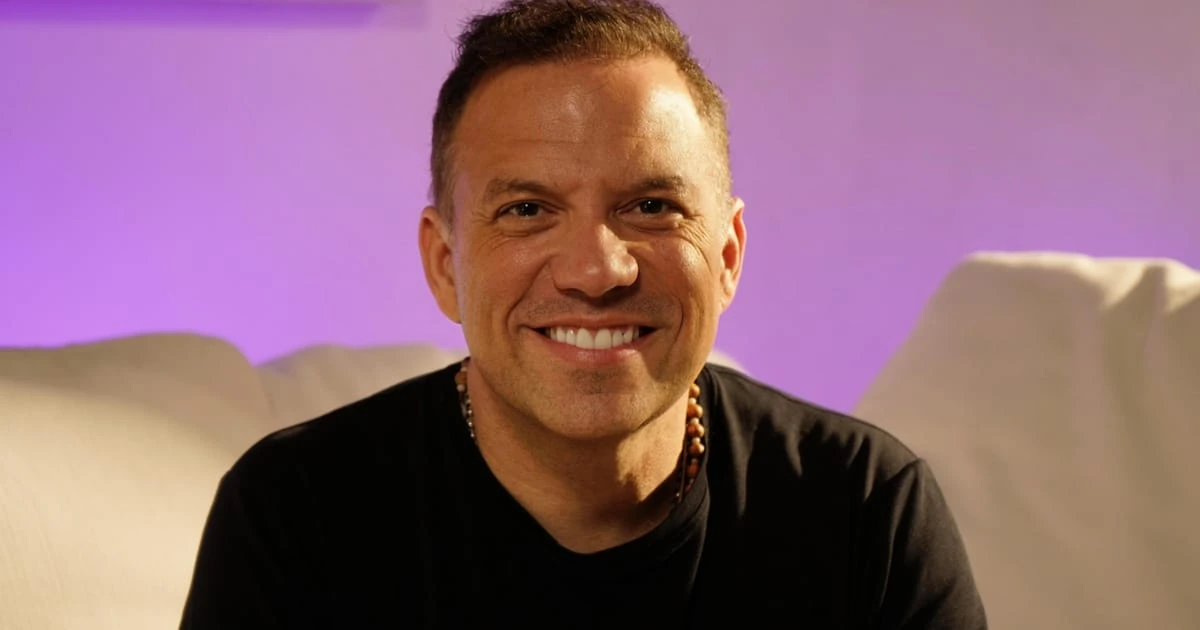
Who Santiago Botero Jaramillo is and why people are searching his net worth

Santiago Botero Jaramillo, whose full legal name appears in Colombian official documents as Raúl Santiago Botero Jaramillo (cédula 98.567.762), was born on April 9, 1974. He is an agronomy engineer by training but built his public profile as an entrepreneur and businessman in the financial services sector. He founded Finsocial, a Colombian fintech company focused on payroll-backed consumer lending, in 2012, and served as its CEO and legal representative for nearly a decade. His name appeared in Forbes Colombia, Portafolio, El Espectador, and multiple investor documents during that time, which is the primary reason wealth researchers encounter him.
The second reason his net worth is being searched in 2026 specifically is his presidential run. He filed as an independent candidate for Colombia's 2026 presidential election under the movement 'Colombia Pa' Lante Unida' and the slogan 'Romper el Sistema.' His signature registration was confirmed by the Registraduría in January 2026. Political candidates in Colombia, especially self-funded ones, attract financial scrutiny, which is a natural driver of search interest around this topic. He publicly stated he would finance his own campaign and accept no outside money, which immediately raises the question: how much is he actually worth?
What we can confirm about his career and income sources
Finsocial is the cornerstone of his documented wealth. He founded the company in 2012 and built it into a scaled payroll-lending operation. In 2018, Kandeo invested more than USD $17. 5 million in Finsocial, a milestone Forbes Colombia covered as the company entering 'the big leagues' of Colombian entrepreneurship.
In late 2019, Symbiotics provided an additional USD $20 million in funding, and a self-published document on his campaign site claims Finsocial received USD $125 million on December 27, 2019 (that figure is self-reported and should be treated as unverified without third-party corroboration). By 2020, Finsocial reported disbursing over 250 billion Colombian pesos (roughly USD $65–70 million at prevailing exchange rates) in loans, entirely through digital channels. By 2023, the company's managed portfolio balance reached approximately 1.
083 trillion pesos and annual origination exceeded 460 billion pesos, according to Forbes Colombia.
The single most important event for his personal finances is the July 2021 full sale of Finsocial to international investors, as reported by Forbes Colombia. This is the likely primary liquidity event in his career. After the sale, he is described on his own site as having interests in '35+ empresas,' suggesting he either reinvested proceeds into a diversified portfolio or had parallel business interests that predated or survived the Finsocial exit.
His campaign site and public interviews confirm he remained active as an entrepreneur and philanthropist after 2021. A 2024 Forbes Colombia article about a Finsocial securitization transaction still identifies him as CEO and founder, which may indicate a continued advisory or governance role, though the nature of that role after a full sale is not clearly defined in available sources.
Beyond Finsocial, documented income sources are limited in the public record. His political campaign activity, intellectual property filings listed in a Colombian Superintendencia de Industria y Comercio document, and his self-described portfolio of companies represent potential additional value, but none carry attached financial figures in available sources.
How net worth estimates are actually calculated for someone like him

For a private entrepreneur who has not filed personal asset declarations beyond what Colombian electoral law may require, net worth estimation relies on inference, not direct data. The standard methodology for someone in his position works like this: identify the company's likely valuation at the time of sale, estimate his equity stake percentage, subtract any debt or obligations tied to that stake, then add other confirmed or reasonably inferred asset categories. The problem is that none of those inputs are publicly confirmed for Botero Jaramillo. We do not have a reported sale price for Finsocial, we do not know his ownership percentage at the time of sale, and we do not have a personal balance sheet.
What we can do is build a range using comparables. Colombian fintech companies of Finsocial's scale in 2021 (portfolio in the hundreds of billions of pesos, institutional backing from multiple global investors) typically transact at valuation multiples of 1. 5x to 3x book value or 3x to 6x annual origination. If we apply those multiples conservatively to Finsocial's known metrics, a plausible company valuation at exit falls somewhere between USD $30 million and $100 million.
A founder's retained equity stake after multiple institutional funding rounds often sits between 20% and 50% (dilution from Kandeo and Symbiotics investments would reduce this). That math produces a personal pre-tax proceeds range of roughly USD $6 million to $50 million, which is consistent with the base-case estimate of $15–$25 million after accounting for taxes, transaction costs, and reinvestment risk.
Estimated net worth range in 2026
Here is how the three scenarios stack up, with the key assumptions behind each:
| Scenario | Estimated Net Worth | Key Assumption |
|---|---|---|
| Conservative (low end) | USD $10–15 million | Finsocial sold at modest valuation; heavy dilution before exit; limited post-sale asset appreciation |
| Base case | USD $15–25 million | Mid-range sale valuation; moderate equity stake retained; partial reinvestment into 35+ company portfolio |
| Optimistic (high end) | USD $30–40 million | Higher Finsocial valuation; larger retained stake; successful post-sale ventures and asset growth since 2021 |
The base case of $15–25 million is the most defensible given the available evidence. If you are also tracking belmonte net worth figures for similar founder-exit profiles, compare deal timelines and any public disclosures before treating any estimate as definitive. If you are specifically looking for Mateo Jaramillo net worth, use the same approach to triangulate credible sale and ownership details before trusting any single figure.
If you are specifically looking for Mateo Jaramillo net worth, use the same approach to triangulate credible sale and ownership details before trusting any single figure. If you are specifically looking for Patrick Beltran net worth, use the same approach to triangulate credible sale and ownership details before trusting any single figure Mateo Jaramillo net worth. Net worth estimates for Patrick Beltran are typically triangulated from funding events, ownership stakes, and any publicly documented transactions Patrick Beltran net worth.
If you are also researching Mateo Blanco net worth, compare the underlying deal timeline and any available ownership or disclosure details before accepting an estimate. Mateo Blanco net worth estimates are highly sensitive to how you value any business equity and to what disclosures are available. If you are specifically looking for Mateo Beltran net worth, compare how similar founder-exit profiles were valued and what public disclosures exist to support or challenge estimates. The $125 million financing figure from his self-published document, if it reflected debt financing rather than equity, would not meaningfully change his personal equity value.
The 35+ companies claim is unverified in scope or value. His willingness to self-fund a presidential campaign is consistent with someone in the $15–40 million range, where a mid-seven-figure campaign spend is uncomfortable but possible, rather than someone in the $100 million-plus bracket where it would be routine. If you are trying to understand uniquely mateo net worth as well, use the same approach to triangulate credible sale and ownership details before trusting any single figure. If you are focused on uniquely mateo net worth, treat the figures the same way and verify the underlying sale and ownership inputs first.
Wealth breakdown: where the money likely comes from

Based on the available evidence, here is how his estimated net worth is likely distributed across categories. These are informed estimates, not verified figures.
- Finsocial exit proceeds (primary): The July 2021 full sale to international investors is the most likely source of concentrated wealth. Even at the conservative end, a founder's equity in a scaled Colombian fintech with institutional backing would represent millions of dollars after dilution and taxes.
- Post-sale business portfolio: His campaign site claims 35+ companies. Without names, revenue figures, or third-party valuations, these are unquantifiable but represent potential upside beyond the Finsocial exit number.
- Real estate and personal assets: Not confirmed in any public document, but typical for Colombian entrepreneurs at this wealth level. Likely includes personal property in Medellín or Bogotá.
- Intellectual property: A Colombian SIC listing includes his name in an industrial-property context, suggesting some registered IP assets, though their market value is unknown.
- Liquid assets and investments: Post-exit proceeds that have not been redeployed into private companies would typically sit in financial instruments. No public disclosure exists for this category.
- Liabilities: Unknown. Any personal guarantees on Finsocial's debt, ongoing business borrowing for his portfolio companies, or campaign-related expenditures would reduce net worth from the gross asset figures above.
Evidence you can trust and evidence you should treat carefully
Not all sources about Santiago Botero Jaramillo's finances carry equal weight. Here is a transparent look at what the evidence hierarchy looks like for this estimate:
| Source | Type | Reliability | What It Confirms |
|---|---|---|---|
| Forbes Colombia (2019, 2021, 2024) | Third-party business press | High | Finsocial founding year, Kandeo investment ($17.5M+), full sale in July 2021, 2023 portfolio scale |
| El Espectador interview (2020) | Third-party press | Medium-high | Finsocial disbursement of 250B+ pesos; 100% digital model |
| LatamFintech (2019/2020) | Industry press | Medium-high | Symbiotics $20M funding to Finsocial |
| Finsocial Informe de Gestión 2017 and 2023 | Company-published investor reports | Medium | Operational scale and governance; his role confirmed |
| Colombian judicial portal / Rama Judicial PDF | Official government document | High | Full legal name and ID (98.567.762) as Finsocial legal representative |
| Registraduría / Publimetro (2025) | Electoral/official reporting | High | Confirmed as 2026 presidential candidate |
| SantiagoBotero.com / campaign site | Self-published | Low for financial claims | $125M figure and 35+ companies claim; treat as unverified |
| Infobae (Apr 2025) | Third-party press | Medium | Self-funding campaign statement; no asset figure provided |
| Caracol Radio report on 'Santiago Jaramillo Botero' | Third-party press | Low relevance | Different individual; inverted name; do not conflate with this subject |
The Caracol Radio item about a 'Santiago Jaramillo Botero' sanctioned by Colombia's Procuraduría is almost certainly a different person with an inverted name. The subject of this article is Raúl Santiago Botero Jaramillo, associated with Finsocial and based in the entrepreneurship/fintech world, not described as a concejal in any credible source. If you are trying to assess his net worth estimates, focus on verifiable items like the Finsocial sale and treat any speculation about personal assets as unconfirmed. Always check for name-order inversions when researching Colombian public figures.
How to verify and update this estimate yourself
Net worth estimates for private Colombian entrepreneurs are not static, and the sources that would move this number most are not always easy to find. Here are practical steps to check and update the estimate as new information becomes available:
- Check the Colombian Cámara de Comercio registries for any companies listed under his name or cédula (98.567.762). This can surface business interests not mentioned in press coverage and may include capital contributions that signal asset scale.
- Monitor Colombia's Registraduría and Consejo Nacional Electoral. Presidential candidates are required to submit financial declarations (bienes y rentas) as part of their candidacy paperwork. If Botero Jaramillo advances in the 2026 race, this disclosure will be the most direct primary source for his declared personal assets.
- Search the Colombian Superintendencia Financiera for any filings related to Finsocial S.A.S. post-2021, especially around the securitization reported in February 2024. This may clarify whether he retained any financial interest in the company after the 'full sale.'
- Look for the Finsocial sale transaction in M&A databases (Refinitiv, Bloomberg, or LatamFintech deal trackers). If the deal was publicly reported at a valuation, that number would allow a more precise equity calculation.
- Treat any third-party 'net worth' ranking site that gives a precise figure (such as '$50 million exactly') without citing primary sources as low-quality. For private entrepreneurs, precision without sourcing is a red flag, not a sign of better research.
- Track his campaign spending disclosures. Colombian electoral law requires reporting of campaign expenditures. A self-funded campaign budget would provide a minimum floor on his liquid assets.
If his bienes y rentas declaration becomes public before the June 2026 election, that single document will be more reliable than any media estimate including this one. Check the Registraduría Nacional del Estado Civil website or Colombian financial press for that release. The Registraduría Nacional del Estado Civil provides an official reference point for verifying political participation and candidate or party registration context for the 2026 election.
How his profile fits into the broader Latin American entrepreneur wealth picture
A $15–25 million net worth for a Colombian fintech founder who exited a scaled, institutionally backed company is consistent with mid-tier entrepreneurial exits in the region. Colombia's fintech sector saw significant international capital flows between 2018 and 2022, and founders who attracted Kandeo and Symbiotics-caliber investors before exit typically walked away with meaningful but not billionaire-level proceeds, especially after dilution from multiple funding rounds. Botero Jaramillo sits comfortably in the affluent-entrepreneur tier of Latin American business figures, well above most of the population but well below the Forbes Latin America 100 threshold, which generally starts around $200–$300 million. This context matters for evaluating the self-funded campaign claim: it is plausible but would represent a significant personal financial commitment at the base-case estimate.
For readers interested in comparable wealth profiles from the Colombian and Latin American business world, similar research methodology applies to other regional entrepreneurs and public figures documented on this site. The pattern of private-company founders whose wealth is anchored in a single exit event, supplemented by later portfolio activity, is common across the region and requires the same combination of deal-timeline tracking and official disclosure monitoring used here. If you are specifically looking for mateo beltran net worth, compare his public career timeline and any disclosed financials to the methodology used in this article.
FAQ
Why does the net worth estimate stay wide (USD $10M to $40M) when the article uses comparables?
The largest uncertainty is not the math, it is the missing inputs: Finsocial’s actual transaction value, and how much equity (after dilution) Botero Jaramillo personally retained at the July 2021 exit. Even a correct valuation multiple can produce a wide net worth range if the founder ownership percentage is unknown, and that is why the estimate stays broad.
How should I account for possible debt or obligations tied to his Finsocial stake?
If he received proceeds net of debt, personal cash could be lower than “headline” equity value. However, unless you can tie specific liabilities to his ownership stake at exit, you cannot meaningfully adjust the range. A practical workaround is to treat any debt as embedded in the company valuation, then only refine the personal number once sale price and retained equity are known.
Does his statement that he would self-fund the 2026 presidential campaign prove his net worth?
A self-funded campaign does not translate 1:1 into net worth. What matters is the combination of cash on hand, access to credit, whether campaign spending includes in-kind support, and whether he committed personally versus through a network entity. For example, a mid-seven-figure campaign can be plausible at $15–$25M net worth but would be an outlier if it represents most of his liquid cash.
What would most likely change the estimate if new information appears?
Because the article does not use personal balance sheet disclosures, “net worth” here means an inferred estimate, not a reported figure. Re-checking the number typically means updating assumed equity retention and post-exit reinvestment, not recomputing the same comps repeatedly. If no new ownership data appears, the biggest improvement usually comes from any credible disclosure of sale price or founder stake.
If he stayed involved after the sale, can ongoing income make the net worth much higher?
If he stayed as CEO founder after the sale but remained involved in governance, compensation could raise annual income, yet it would still not catch up quickly enough to turn $15–$25M into $100M+. In other words, post-sale earnings can add to net worth, but the exit liquidity event is usually the dominant driver for a founder-entrepreneur like this.
How should I interpret the unverified USD $125M financing claim in relation to his personal wealth?
Yes. The unverified “USD $125M” figure could refer to debt financing, a funding round, or a reporting metric. If it was debt rather than equity, it would not directly increase his equity proceeds, so the impact on personal net worth would be limited unless you can show it was tied to equity value rather than loans or securitization.
Does the claim of 35+ companies automatically mean his net worth is closer to the top of the range?
The “35+ empresas” claim is useful as a direction of diversification, but without values it cannot anchor a precise number. A common pitfall is treating “number of companies” as if it reflects proportional wealth. Better approach: identify which entities are majority-owned, whether they are operating or holding companies, and if any have reported transactions or financing.
How can reinvestment risk and illiquid assets affect the net worth estimate?
Not necessarily. If he reinvested proceeds into illiquid assets, the net worth could remain in the same ballpark, but liquidity could be lower than assumed. For net worth estimation, illiquidity affects how credible it is to assume you can “cash out” at appraisal values, especially shortly after an exit.
What is the most common mistake when researching his finances in Colombian sources?
If his name appears in records under a different order (for example, “Santiago Jaramillo Botero” vs “Raúl Santiago Botero Jaramillo”), you may accidentally attribute someone else’s role or liabilities. The safest method is to validate cédula or role alignment with Finsocial-related documents before using any person-specific financial claims.
Where should I look for the highest-quality update to this estimate for 2026?
Track whether any Colombian electoral or asset disclosure document becomes publicly available for the 2026 run. A single official bienes y rentas declaration would outperform media inference, because it can show reported assets and sometimes liabilities. If it appears, update the range by replacing inferred categories with disclosed line items.