Why do the numbers vary so much across different sites? Because net worth estimates for college and emerging professional athletes are assembled from indirect signals: reported NIL deal categories, agent activity, transfer portal decisions (which often reflect financial incentives), endorsement announcements, and comparisons to similar athletes at the same career stage. None of that adds up to a precise bank balance. What it gives you is a credible bracket, and right now that bracket for Fernando Mendoza is solidly in the low-to-mid seven-figure zone.
Which Fernando Mendoza are we actually talking about?

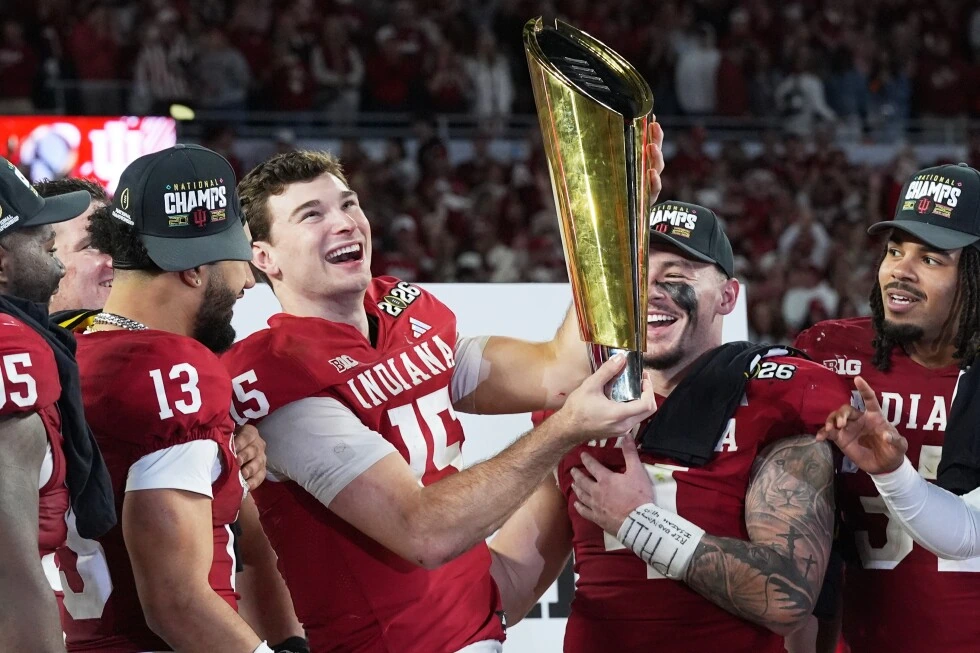
This is the first question you need to settle before trusting any net worth figure you find online. Fernando Mendoza is not a rare name, and search results mix up multiple people who share it. The one generating the most financial interest in 2025 and 2026 is Fernando Mendoza the quarterback, who played for the University of California before transferring to Indiana, where he won the Heisman. His recognition even reached the Florida Senate, which passed Resolution SR 1812 specifically honoring the Indiana University quarterback for his performance and his Heisman Trophy election. That legislative recognition is a useful identity anchor: if a source is talking about that Fernando Mendoza, it is talking about the athlete.
Search queries also surface a "Dr. Fernando Mendoza" and a "Fernando Mendoza Sr.," which point to entirely different individuals, likely medical professionals, academics, or business figures who share the name. There are also references to a Fernando Mendoza in Latin American entertainment and business contexts. The disambiguation rule here is simple: confirm the professional domain first (sports, medicine, business, entertainment), then verify with a secondary detail like location, employer, or known career milestone before accepting any net worth figure as relevant to your search.
If you are researching the broader Mendoza family of public figures, it helps to know that there is a well-documented tradition of high-achieving Mendozas across multiple industries. For a broader look at how wealth accumulates across different members of this surname, the Mendoza net worth overview covers multiple notable figures and puts individual estimates in useful context.
How Fernando Mendoza built his wealth: career earnings and major milestones
Fernando Mendoza's financial story is a product of the NIL era in college football. Before NIL rules changed in 2021, a Heisman-caliber quarterback at a major program had no legal way to monetize his college fame. Mendoza's generation changed that completely. By the time he transferred to Indiana and built the season that earned him the Heisman in 2025, he had years of NIL deal-building behind him. His earning potential accelerated at California, where even mid-tier Power Five quarterbacks with strong stats can command five-figure NIL agreements with local and regional brands.
The Heisman win itself is a financial event. It dramatically increases an athlete's endorsement market, opening conversations with national brands that would not have been realistic before. Past Heisman winners have signed endorsement deals ranging from six figures in the short term to multi-million dollar agreements once they reach the NFL. At this stage, Mendoza's professional trajectory, whether he enters the NFL draft or pursues other opportunities, will determine how much of that Heisman premium he actually captures. Quarterbacks who convert Heisman momentum into a first-round NFL pick typically see their net worth jump into the $5 million to $15 million range within two to three years of the award.
The major financial milestones to track for Fernando Mendoza going forward are: NFL draft position (if applicable), rookie contract value, signing bonus, and the first major national endorsement deals. Those four data points will reshape any estimate you see today.
| Wealth Source | Estimated Contribution | Confidence Level |
|---|
| NIL deals (college career) | $500K – $1.5M cumulative | Moderate (no public disclosure required) |
| Post-Heisman endorsements | $200K – $800K (first 12 months) | Low-to-moderate (deal sizes not confirmed) |
| NFL rookie contract (projected) | $4M – $20M+ depending on draft round | Low (contingent on draft outcome) |
| Appearances, speaking, licensing | $50K – $200K annually | Low (typical for Heisman-level athletes) |
Fernando Mendoza Sr., Dr. Fernando Mendoza, and family net worth: what to do when data is scarce

Searches for "Fernando Mendoza Sr net worth" and "Dr Fernando Mendoza Sr net worth" are almost certainly looking for a parent or relative of the quarterback, or for a completely separate individual who happens to share the name. Public data on the parents of college athletes is rarely available in any structured form. MARCA notes that family background information for Fernando Mendoza is not always paired with reliably public parent net worth details Public data on the parents of college athletes is rarely available in any structured form.. They are private individuals, and unless a parent is independently notable (a business executive, a public official, a professional athlete themselves), their financial details simply are not part of the public record in the way that a celebrity's might be.
When you run into this kind of search dead end, the practical approach is to look for the parent's professional domain first. If Fernando Mendoza Sr. is a physician (which the "Dr." prefix suggests), you can use state medical board directories to confirm licensure and specialty. From there, physician compensation data by specialty and region is publicly available through medical compensation surveys, and you can use those to build a reasonable proxy estimate. A physician in private practice in a mid-cost-of-living U.S. state, for example, earns a median of $200,000 to $400,000 annually depending on specialty, which translates to a net worth estimate in the $1 million to $5 million range after a full career, before accounting for real estate, investments, or business ownership.
That is not a direct figure for any specific Fernando Mendoza Sr., but it is an honest, data-grounded proxy when no public figure is available. For researchers interested in how family wealth compounds across generations in Hispanic professional families, the story of Estelito Mendoza offers a useful parallel: you can read that detailed breakdown in the Estelito Mendoza net worth profile, which covers how professional career earnings translate into long-term family wealth.
What public records actually exist for family members
- Property records: county assessor databases show real estate holdings and assessed values, which are a partial proxy for wealth
- Business registrations: state secretary of state databases list company officers and registered agents, which can confirm business ownership
- Court records: tax liens, judgments, and bankruptcy filings are public and can indicate financial stress or major assets
- Professional licensing: medical board, bar association, and contractor license databases confirm professional status and sometimes employer
- Campaign finance disclosures: if a family member has donated to political campaigns, those donations are publicly searchable through the FEC database
How net worth estimates are built and why they differ

Every net worth estimate you read for a living person, especially an athlete, is a model built on imperfect inputs. The methodology matters more than the headline number. A credible estimate for Fernando Mendoza would start with confirmed income sources (reported NIL deals, any disclosed contract details) and layer on top of that industry benchmarks for similar athletes at the same career stage. It would then subtract reasonable estimates for taxes, agent fees (typically 3 to 5 percent of contracts), and living expenses, and add back any publicly known asset holdings.
The reason estimates vary across different sites is that each one weights these inputs differently, uses different benchmark comparisons, and updates at different frequencies. A site that last updated its Fernando Mendoza figure before the Heisman win will show a much lower number than one that refreshed after December 2025. Always check when a figure was last updated, and treat any estimate older than six months for a rapidly rising athlete as potentially stale.
It is also worth comparing how similar athletes in adjacent career trajectories have been valued. Stiven Mendoza's net worth profile is a useful reference point for understanding how Latin American athletes at different levels of professional development accumulate wealth, and the methodology used there applies directly to evaluating any emerging athlete's financial picture.
Cross-checking a net worth estimate: a practical checklist
- Confirm identity: verify the person's full name, professional domain, and a secondary identifier (team, employer, location) before using any figure
- Check the update date: net worth pages that do not show a recent update date are likely pulling from stale aggregated data
- Look for sourced income: does the estimate reference actual deals, contracts, or disclosures, or is it just a number with no explanation?
- Compare two or three credible sources: if estimates cluster around a similar range, that range is more trustworthy than any single outlier
- Apply industry benchmarks: use known salary scales and NIL market data to sanity-check whether the estimate is plausible for someone at that career stage
- Search public records independently: property records, business filings, and court records can confirm or complicate a published estimate
Credibility, source quality, and avoiding the speculation trap
The biggest problem with celebrity net worth content online is that numbers get copy-pasted from site to site without anyone checking whether they are still accurate or were ever sourced properly in the first place. For a figure like Fernando Mendoza, whose financial profile is evolving quickly, that problem is especially acute. The most credible sources for his wealth are: verified NIL deal announcements from brands or his representation, sports journalism from outlets that cover the NIL market specifically, NFL contract databases if and when he enters the league, and public records like property transactions.
Sources to treat with skepticism are: anonymous "net worth" aggregator sites with no methodology explanation, figures that have not changed in more than a year despite obvious career developments, and estimates that are suspiciously round numbers (exactly $5 million, exactly $10 million) without any breakdown of how that figure was reached. Round numbers are almost always placeholders, not calculations.
It is also worth understanding that the business of estimating wealth works differently depending on the individual's career path. Someone like Ruben Mendoza of FBM built wealth through business ownership and entrepreneurship, which leaves a very different paper trail than an athlete does. Business owners have company valuations, tax filings, and ownership stakes that can be partially traced through public records. Athletes, especially at the college level, have income that is largely private. Understanding that structural difference helps you calibrate how much certainty to assign to any given estimate.
For readers curious about how other notable Mendozas in the public eye have approached wealth-building in ways that are better documented, the Jesus Mendoza net worth profile and the Stephon Mendoza net worth breakdown both illustrate how different career paths produce different levels of financial transparency, and how researchers can adapt their methodology to each case.
What to do next if you are still searching
If your goal is to track Fernando Mendoza's financial progress specifically, the most useful thing you can do right now is bookmark a few quality sources and check back after key career events: NFL draft announcement, first professional contract signing, and any major endorsement deal news. Those are the moments when estimates will shift meaningfully and when new sourced figures will appear.
If you are trying to research a different Fernando Mendoza (the Sr., the Dr., or a family member), start with the disambiguation steps above. Confirm the professional domain, run the person's name through state licensing databases, and check county property records for the state where they are known to live or work. From there, apply the industry benchmark approach described earlier to build a reasonable proxy estimate.
And if you are simply trying to understand how wealth is estimated and communicated for Hispanic public figures more broadly, the methodology here is the same one used across this site. It applies whether you are looking at an athlete, an entrepreneur, or a media personality. The goal is always the same: find what is documented, acknowledge what is not, and give a credible range rather than a false precise number. For more on how those estimates play out across different names and career paths, the Mendoza net worth roundup is a good place to keep exploring.