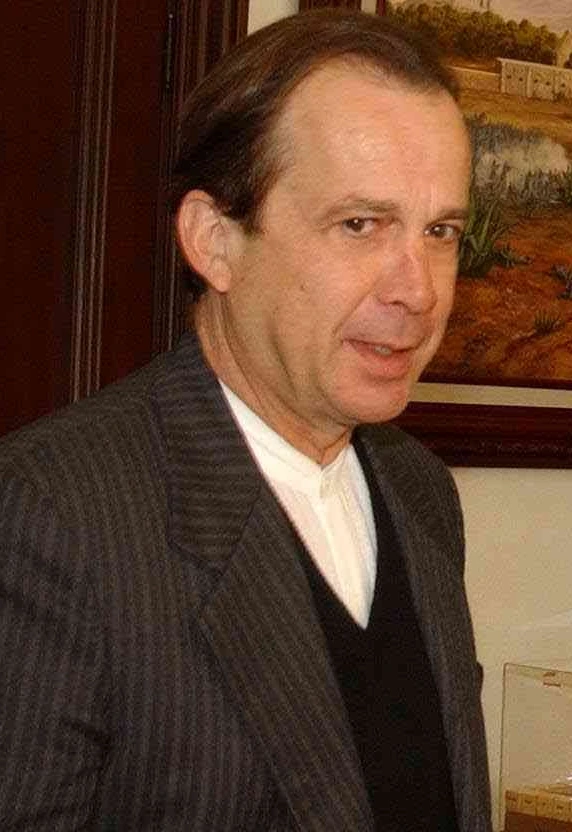
Who Mauricio Fernández Garza Is (and Why Name Confusion Happens)
Mauricio Fernández Garza (born April 2, 1950; died September 22, 2025) was a Mexican businessman, politician, and art collector best known as the four-time municipal president (alcalde) of San Pedro Garza García, one of Mexico's wealthiest municipalities, located in the Monterrey metropolitan area. He was affiliated with the PAN (Partido Acción Nacional) and also served as senator for the state of Nuevo León. His family had deep roots in industrial wealth through ties to the Fernández Ruiloba family, owners of PYOSA (Pigmentos y Óxidos S.A.), a major Mexican chemicals and pigments business.
Name confusion is a real issue here. Searching "Mauricio Fernández net worth" can pull up results for several different people. There's Kyle and Mauricio's combined net worth from the real estate and reality TV world (that's Mauricio Umansky), and there are profiles for other Latin American figures sharing the Mauricio Fernández surname. To be precise: the subject of this article is the Nuevo León-based industrialist-politician, not the Los Angeles realtor, not Mauricio Dubón (the baseball player), and not Mauricio Hoyos or any other similarly named personality. The clearest identifiers for this specific person are his ties to San Pedro Garza García, PYOSA, and the Grupo Alfa network.
The Quick Net Worth Answer

The most credible estimate places Mauricio Fernández Garza's net worth in the range of $800 million to $900 million USD. A Vanguardia report from around 2012 cited his fortune at approximately $800 million dollars in the context of his political ambitions. POSTA México, drawing on what it described as "estimaciones periodísticas" (journalistic estimates), suggested the figure could reach around $900 million, though it noted this came from older unverified documents rather than recent public audits.
No official wealth disclosure exists, as Mexico does not require private citizens or local politicians to publish certified balance sheets. Ma u ricio Hoyos net worth is often mentioned in the same celebrity-wealth searches, but this article focuses on Mauricio Fernández Garza's estimated fortune Mauricio Hoyos net worth.
Treating those two figures as the bookends of a reasonable range, the working estimate is $800M to $900M USD as of the most recent available reporting. Given that he passed away in September 2025, this figure reflects accumulated lifetime wealth and is unlikely to be updated through new income disclosures. It should be read as a historical estimate, not a living fortune tracker.
How the Estimate Is Calculated
There's no single audited source for this number, which is true of most privately held wealth in Latin America. Researchers and journalists typically build an estimate by triangulating several types of evidence: family business ownership and valuation, corporate board participation, known transactions, and asset signals like art collections or real estate. That's the approach that produces the $800M to $900M range here.
The main inputs are: his ownership stake in PYOSA (Pigmentos y Óxidos S.A.), a significant industrial chemicals company; his advisory and board roles across major Mexican corporations; a documented beer brand transaction (more on that below); and his own public statements about his art and artifact collections, which he valued at $50 million to $120 million depending on the source and year. None of these figures come from a Bloomberg Billionaires-style real-time audit, so the estimate carries genuine uncertainty. The $800M to $900M range reflects the consensus of Mexican business press at peak reporting, not a certified calculation.
Career Earnings and the Major Income Drivers
Fernández Garza built his career across multiple industries before entering politics full time. His academic foundation came from Purdue University, where he studied industrial administration, and he went on to hold finance and planning director roles at Grupo Conductores Monterrey. He later became director general of Dispersiones Múltiples and held a leadership role in the tourism division of Grupo Alfa, one of Mexico's largest industrial conglomerates.
His founding roles are particularly relevant to wealth estimation. He co-founded Uniser and ITC in La Habana, and was listed as a founder of Comercializadora de Puros, Artesanarte, and the Museo del Ojo. Each of these represents either a revenue-generating business or a cultural institution that involved significant capital deployment. His board and advisory positions at BBVA Bancomer, Hylsamex, Sigma Alimentos, Versax, and Alpek, in addition to Grupo Alfa itself, are documented in BMV (Bolsa Mexicana de Valores) prospectus filings, which are about as close to a primary corporate record as you'll find for a figure of this type in Mexico.
The most concrete transaction milestone is the Especialidades Cerveceras story. He and a relative launched the company in 1998, building the Casta beer brand. FEMSA (Fomento Económico Mexicano) acquired the company and the Casta brand in 2005. While the transaction value was not publicly disclosed, a sale to FEMSA, one of the largest beverage companies in Latin America, represents a meaningful liquidity event. This kind of founder-exit is a standard wealth-building milestone that analysts flag when trying to substantiate high net-worth estimates for Mexican industrial families.
Assets, Business Interests, and Financial Milestones
PYOSA sits at the center of the asset picture. Fernández Garza's family connection to the Fernández Ruiloba ownership of Pigmentos y Óxidos S.A. de C.V. is documented in corporate filings, including BMV prospectus documents from 2012 that list him as a consejero (board member) with PYOSA explicitly referenced as a related entity. Industrial chemicals businesses of this scale in Mexico represent substantial balance-sheet value, and family ownership stakes in such firms are the primary reason analysts put his net worth well above $500 million.
The art and artifact collection is a notable second asset class. In 2022, the Los Angeles Times covered a controversy around his construction of a replica mansion to house his collections, during which Fernández Garza himself stated that his collections (art, historic artifacts, fossils) were worth blank" rel="noopener noreferrer">approximately $50 million. Separately, Elceo.com cited claims, attributed to his own prior social media statements, that the collection had grown to around $120 million. That's a wide spread, and without a certified appraisal, the honest answer is somewhere between $50M and $120M for the collection alone. blank" rel="noopener noreferrer">His Milenio profile described him explicitly as a politician, businessman, and art collector, confirming that this was a publicly recognized part of his identity and financial profile.
His connections to the broader Garza Sada and FEMSA network also matter for wealth context. Elceo.com documented his roles as consejero across multiple companies tied to that network, and FEMSA's acquisition of his beer brand is the clearest documented link between his entrepreneurial activity and one of Mexico's most powerful industrial families. This network effect, where board participation and family ties intersect with major conglomerates, is a common pattern among wealthy Nuevo León businesspeople and it helps explain why estimates for someone like Fernández Garza land in the hundreds of millions even without a public IPO or disclosed salary.
Asset and Wealth Signal Summary
| Asset / Income Source | Estimated Value / Signal | Reliability |
|---|
| PYOSA (Pigmentos y Óxidos S.A.) ownership stake | Undisclosed; core family industrial asset | BMV filings confirm board role; stake value unaudited |
| Board/advisory roles (Grupo Alfa, BBVA Bancomer, Sigma, Alpek, Hylsamex, Versax) | Executive-level compensation + equity signals | Confirmed in BMV prospectus documents and press profiles |
| Especialidades Cerveceras / Casta brand (sold to FEMSA, 2005) | Undisclosed transaction value | Sale confirmed via Wikipedia ES and Milenio reporting |
| Art, artifacts, and fossil collection | $50M (self-reported, 2022) to $120M (prior claim) | Self-reported; no certified third-party appraisal on record |
| Total net worth estimate (journalistic) | $800M to $900M USD | Cited in Vanguardia (~2012) and POSTA México; not audited |
How to Verify This Estimate (and Spot Unreliable Claims)

If you want to do your own research on this figure, here are the most useful starting points and some honest notes about what each type of source can and can't tell you.
- BMV (Bolsa Mexicana de Valores) prospectus filings: These are the closest thing to a primary record for his corporate roles. They list him as a consejero alongside named companies including PYOSA and FEMSA-network entities. They confirm identity and board participation but don't disclose personal wealth.
- Mexican business press (El Economista, El Universal, Milenio, Vanguardia): These outlets produced the most detailed career profiles and are the source of the $800M figure. They're credible for Mexican business journalism but are not audited financial disclosures.
- Los Angeles Times (2022 reporting): Provides a specific, reported asset figure ($50M for his collections) tied to a real controversy with named sources. This is one of the more reliable individual asset signals in the public record.
- Wikipedia (EN and ES): Useful for identity verification and basic career timeline, but Wikipedia entries for Mexican politicians and businesspeople are often incomplete. Use them to orient yourself, not as a final source.
- Aggregator or AI-generated net worth pages: Sites that generate automated wealth profiles (sometimes labeled 'PeopleAI' style) for figures like Fernández Garza often recycle old press numbers or extrapolate without methodology. They're fine as a starting point but should never be treated as evidence on their own.
- POSTA México and similar outlets citing 'estimaciones periodísticas': These are journalistic estimates, not audits. The $900M figure from POSTA specifically flagged that its sourcing came from older, unverified documents. That transparency is actually useful: it tells you the number is a ceiling estimate, not a floor.
The broader challenge with wealth research on Mexican industrialists is that private family-owned companies in Mexico are not required to publish detailed financial disclosures the way publicly traded firms are. PYOSA's true valuation, and what share of it belonged to Fernández Garza personally, is not a matter of public record. This is a structural gap, not a research failure. The same limitation applies to many Latin American business families, which is part of why this site focuses on documented signals rather than claiming false precision. For comparison, Maurice Benisti's net worth faces similar challenges when researchers try to break down wealth tied to family business structures rather than publicly traded assets.
Putting the Number in Context
An $800M to $900M estimated fortune places Fernández Garza firmly in the tier of Mexico's regional industrial elite. He wasn't in the same category as Carlos Slim or the Zambrano family, but within the Nuevo León business ecosystem, wealth at this scale is associated with multi-generational industrial families who combine manufacturing, finance, and political influence. His board participation across BBVA Bancomer, Grupo Alfa, and FEMSA-adjacent companies reflects a pattern common to that tier: wealth is maintained and grown through network participation rather than a single dominant asset.
For readers who arrived here after reading a broader overview of Mauricio's net worth across various public figures sharing that first name, it's worth being clear: this specific estimate is grounded in the industrial and political career of the Nuevo León figure, not in entertainment, sports, or any other domain. The $800M to $900M range is a reasonable working figure for historical reference, carries meaningful uncertainty due to the private nature of his key assets, and should be updated only if new estate disclosures, inheritance filings, or corporate transaction records become public following his death in September 2025.